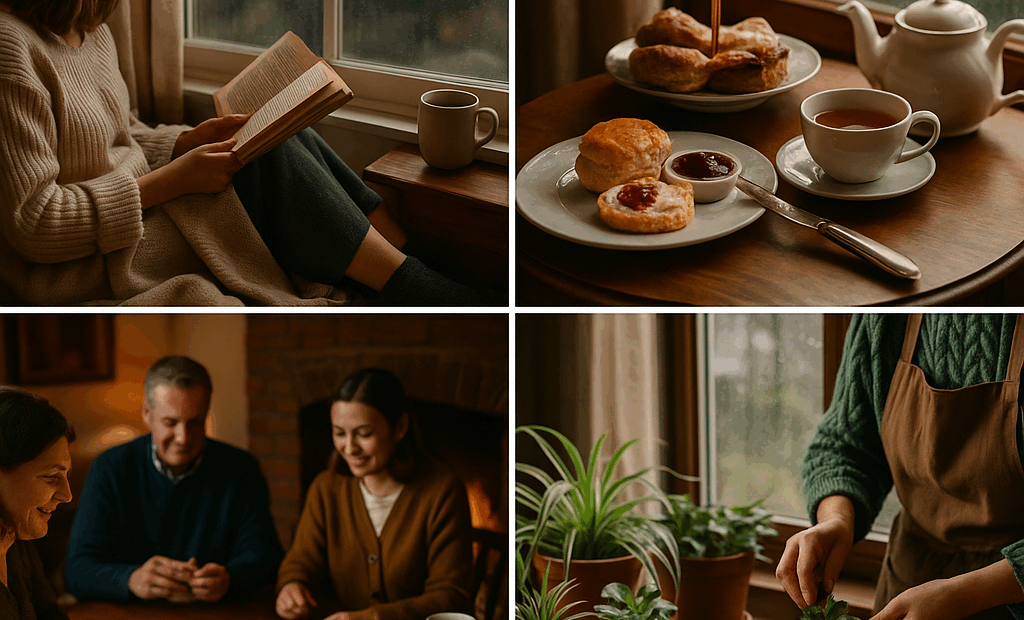
There is a distinct elegance in how a rainy English afternoon invites us to slow down. The gentle soundtrack of rain on windowpanes, the muted light through leaded glass, and the promise of indoor warmth: these form the backdrop for meaningful yet straightforward rituals. From the ritual of tea to the slow art of crafting, rainy days in England become opportunities for comfort, creativity and connection—with ourselves, our homes and our loved ones.
Introduction
When rain begins its steady descent over the English landscape, life often shifts rhythm. Rather than rushing outdoors, the weather invites repose —an unhurried mode of living in which the indoors becomes a sanctuary. In British culture, the rain is not merely an impediment; it’s an ambient companion. Psychological research indicates that the sound and presence of rain can enhance mood, creativity, and a sense of calm.
In this context, cosy pastimes become more than idle diversion—they become rituals of restoration. English tradition supplies a rich palette of such activities: reading by the window, savouring a proper afternoon tea, tending plants indoors, writing letters, and more. These are not simply habits; they carry cultural resonance, tactile pleasure and emotional value. Below are ten such pastimes, described with attention to tradition, mindset and how you can make the most of them on a rainy day.
1. Curling Up with a Good Book
Why it works
- Rain provides a natural auditory backdrop—its steady rhythm helps one focus or drift into quiet reflection.
- Reading has long been a well-valued pastime in English homes: a way to replace outdoor activity when weather discourages it.
- A good book offers mental escape, emotional connection, or gentle stimulation—ideal for a day when the weather slows things down.
How to elevate the experience
- Position yourself near a large window or in a nook with a view of raindrops or darkening skies.
- Use warm ambient lighting—lamps rather than overhead lights—to maintain a relaxed visual environment.
- Choose a genre that suits your mood: classic English literature for introspection; a gripping modern novel for absorption; or a coffee-table book for slower browsing.
- Pair the reading with a warm drink and a soft throw or blanket to fully engage both mind and body.
Cultural note
In England, reading by the fire or window during inclement weather has historical resonance—when outdoor leisure was curtailed, a book became a bridge to worlds beyond the weather. It remains a testament to the enduring value of quiet time.
2. Afternoon Tea and Baking
Historical context
The tradition of afternoon tea in England dates to the mid-19th century. Anna Russell, Duchess of Bedford, is often credited with initiating the ritual around the 1840s, when she found herself hungry between a late lunch and an even later dinner and requested tea and cakes around 4 pm.
Why it’s perfect for rainy days
- The warmth of the kettle, teapot, and fine china contrasts beautifully with the grey skies outside.
- Baking invokes smell, texture and process—senses that enrich the indoor environment when outdoor stimuli are muted.
- The ritual of tea invites slowing: choosing a blend, pouring, sitting down, savouring—rather than rushing.
- Baking a fresh batch of scones or biscuits makes the day feel special, even without venturing out.
How to indulge
- Brew a proper pot of tea: choose a full-bodied black tea, such as Assam or English Breakfast, or a fragrant Earl Grey.
- Bake scones, biscuits or simple cakes—preferably from scratch—so the scent fills your space.
- Set a small table near a window, with a comfortable chair, a cloth or tray, and a moment of stillness.
- Allow yourself time: pour the tea, wait a minute for it to settle, perhaps open a book or simply watch the rain.
- Consider inviting a friend or family member for teatime conversation—even if via video call—to turn the ritual into connection.
Cultural insight
Afternoon tea became a marker of refinement and social pause in Victorian England, but today it is equally valued as a moment of individual respite. The act of baking and pouring tea transforms a rainy afternoon into a mini-ritual of comfort.
3. Board Games, Card Games and Puzzles
Why this pastime works indoors
- Rain may limit outdoor options, but a tabletop game turns the mood inside into lively engagement.
- Playing games stimulates interaction, laughter and a shared sense of purpose, which counterbalances any weather-driven isolation.
- For one or more players, puzzles or card games also offer a gentle challenge without needing structured time outdoors.
Suggestions and tips
- Choose the right type of game for your group:
- Board games (e.g., strategy, family-friendly) for extended sessions.
- Card games (e.g., classic rake, bridge, gin rummy) for flexible turn-based fun.
- Jigsaw puzzles for a slower, contemplative task.
- Prepare a dedicated game tray or table: comfortable chairs, overhead lighting, perhaps a bowl of snacks and a pot of tea or cocoa.
- Keep a “rainy-day game box” accessible so you can switch into play mode quickly.
- If sat alone, consider a one-person strategy game or an intricate puzzle—both encourage focus and presence rather than passivity.
Social and emotional benefits
Playing games indoors under rainy skies fosters connectedness. In British homes, this kind of indoor gathering is a long-standing feature of family life when the weather is unkind. It also counters passive screen time by fostering active participation.
4. Indoor Gardening and Plant Care
Why engage with plants when it’s raining
- Even when outdoors is damp and grey, tending indoor greenery connects you to nature’s rhythms and growth.
- The ambient humidity of rainy days often favours plants, which thrive when the air is quieter and cooler.
- The tactile act of repotting, trimming, and cleaning leaves provides grounding, sensory engagement and a sense of care and growth.
Practical steps
- Identify indoor plants that enjoy mild indirect light (which rainy days often provide): e.g., ferns, spider plants, herbs.
- Create a windowsill display with herbs or houseplants and place them near a rain-splattered pane to enjoy the ambient view.
- Use rainwater (if collected and filtered) to water plants—makes the connection between indoors and outdoors more meaningful.
- Schedule a “plant-care hour”: repotting, dusting leaves, checking soil moisture, pruning dead leaves—all with a cup of tea at hand.
Why this matters
Indoor gardening on a rainy day becomes both an act of nurture and an act of observation. Rain reminds us of the larger weather cycle, while tending plants invites patience, quiet attention and gentle growth. In a culture where gardens hold particular value, bringing a bit of that into the home interior on a grey day turns the interior space into a place of living calm.
5. Writing Letters, Journalling and Reflection
The value of writing when it rains
- Rain often slows external demands and offers mental space; this environment is conducive to reflection, creative thinking and personal writing.
- The tactile act of pen on paper, especially in an era dominated by screens, becomes a deliberate gesture of slowing and attentiveness.
- Journalling or letter-writing taps into English literary tradition: writing in quiet indoor spaces while weather does its ambient work.
How to put it into practice
- Choose a comfortable writing spot: by a window, with natural light or a reading lamp, a warm drink nearby.
- Decide your format:
- Letter to a friend or relative — handwritten on stationery, perhaps sent later.
- Journal entry — not just events but impressions: what the rain sounds like, how the light changes, what you feel.
- Creative short piece — poem, micro-story, scene description inspired by rain outside.
- Make it a habit: set aside 30 minutes and aim for honesty, clarity, and presence rather than perfection.
- Optional: include a rain-watch log—note each time the rain alters pattern, intensity or mood.
Why it’s meaningful
In the quiet pause that rainy days afford, writing becomes a mirror for the inner life. Rather than fighting the weather or ignoring it, you lean into it. This gives the page a mood, a sense of atmosphere, and the result is often richer, more mindful than one might expect.
6. Listening to Music, Vinyl, Podcasts or Radio
Why sound matters
- The steady rhythm of rain can function as ambient sound that enhances other audio experiences—music, spoken word, podcasts.
- Listening engages a different set of senses than reading or crafting and offers variety in how you enjoy an indoor day.
- The English home has a rich heritage of radio listening and music appreciation, especially when outdoor conditions favour staying inside.
Suggested approach
- Choose an appropriate sound:
- Music: jazz, classical, folk—something reflective rather than aggressive.
- Vinyl records: those crackles and fullness can deepen the feeling of ritual.
- Podcast or radio documentary: choose a theme you’re curious about.
- Set the scene: dim lights, comfortable seating, perhaps a hot drink. Let the rain and the audio blend.
- Consider a “rain-listening session”: mark 45-60 minutes just for audio, no multitasking, just listening.
- Optional: keep a notebook by your side and jot down thoughts, lines of interest, and ideas that emerge while listening.
The broader context
Soundways indoor leisure shifts when the weather pushes us inside. In England, afternoons spent listening to the radio or records are classic. When rain closes the door to immediate outdoor activity, turning to sound becomes a vibrant substitute—internalising the environment and mood.
7. Home Cinema: Classic British Films or Documentaries
Why does this fit a rainy day
- The outdoor gloom makes indoor screen time feel more immersive rather than escapist—washing away any guilt associated with staying inside.
- Classic British films or documentaries tie into local cultural resonance—weather, setting and mood often align.
- A screen-based activity balances the otherwise tactile, analogue pastimes and offers mellow entertainment.
How to plan a film afternoon
- Curate a small list of films/documentaries suited to the mood:
- Classic British film: narratives set in rainy or overcast landscapes can mirror your environment.
- Documentary: nature, history, culture—especially with calming narration.
- Prepare the setting: draw curtains slightly to reduce glare, dim overhead lights, arrange cushions or a throw.
- Snacks and drink: a warm brew, popcorn or biscuits, whatever fits the atmospheric indulgence.
- Decide on boundaries: maybe one film or two episodes, to avoid fatigue and keep the feeling special rather than habitual.
Why it matters
Rainy days compress our options; they nudge us toward indoor leisure. Home cinema offers both novelty (films) and comfort (the familiar setting of one’s own home). It becomes an act of embracing the weather rather than resenting it.
8. Crafting, Knitting, Embroidery and Handmade Projects
What makes crafting ideal
- Rain invites the slowing of pace—hand-crafts are slow, methodical and rewarding.
- The sense of making something with your hands, watching it evolve, is especially satisfying when time is otherwise less pressured.
- In historical English contexts, making and mending indoors on wet days was a valued part of domestic life—knitting, embroidery and woodworking not just for utility but for mindful focus.
Project ideas and setup
- Knitting or crocheting: pick a project you can return to gradually—scarf, blanket, baby item.
- Embroidery or cross-stitch: choose a motif inspired by nature or weather (e.g., raindrops, leaves).
- Up-cycling or small woodworking: painting frames, sanding a small shelf, refurbishing an item indoors.
- Set up a crafting corner: good lighting, a comfortable chair, your materials ready, maybe soft background music.
- Consider a “craft-and-reflect” rhythm: work for 30-45 minutes, pause to look outside at the rain, then resume.
Why is this meaningful
Hand-crafting engages fibres of attention, tactile satisfaction and quiet reward. On a rainy day, when external movement is curtailed, creating something resonates deeply—reminding us that indoors can be generative, creative and richly lived.
9. Cooking Comfort Food or Trying a New Recipe
Why cooking suits rainy days
- The act of cooking, particularly comfort food, fills the home with warmth, aroma and texture—contrasting with the cold or damp outdoors.
- Rain slows external errands and movement—so longer-preparation recipes become feasible rather than rushed.
- In English culture, hearty cuisine has always provided comfort during inclement weather—from pie and mash to stews and puddings.
Recipe ideas & ritual
- Choose a dish that fits the mood:
- Hearty stew or cottage pie if you have more time.
- Fresh bread or scones if you prefer a moderate project.
- A new recipe to challenge yourself and expand your culinary repertoire.
- Make the process mindful: focus on chopping, stirring, smell changes, and textures. Let the rain outside be your ambient tempo.
- Serve the meal at a window-table or by the fire, savour slowly, perhaps read or talk rather than rush.
- Leftovers? Consider tomorrow’s lunch as part of the comfort—planning carries the rainy-day mood into the next morning.
Cultural dimension
Comfort food has always held a special place in British homes when the weather turned gloomy. Cooking becomes not just nourishment but ritual and sentiment—anchoring the day in flavour and warmth.
10. Simply Doing Nothing: Sitting, Watching, Being
Why “doing nothing” is valid and valuable
- In a culture that often prizes productivity, rainy days can be guilt-ridden—but allowing yourself to be still can recalibrate your pace, your mind and your environment.
- Research suggests that rain and quiet indoor time assist in lowering stress and improving mental well-being by slowing cognitive tempo.
- Observing rain, listening to its sound, watching light change—all invite mindfulness and presence, which are increasingly rare.
How to undertake this practice
- Choose a comfortable spot: a window seat, an armchair, perhaps with a cup of tea, no phone distractions.
- Resist the urge to fill the time with activity. Instead: watch the rain, let your thoughts drift, observe your breathing.
- If helpful, set a timer for 20-30 minutes to just “be” without guilt or agenda.
- Allow yourself post-session reflection: how did you feel? Light, heavy? Present? Distant?
- You may follow this with a short journal note—what you observed, what you felt—integrating stillness into your daily rhythm.
Why this matters
In the rhythm of life, days of intentional stillness are rare. Rainy weather permits for this. Embracing silence, inner reflection and slow presence reconnects us with a deeper sense of self and space.
FAQs
What makes a pastime truly “cosy” for a rainy day?
A truly cosy pastime offers comfortable engagement, sensory warmth and a pace that matches the weather. It invites you to slow down, settle in and feel safe indoors rather than needing external stimulus. On a rainy day, the environment supports this mood: muted light, soft sounds, tactile comforts. Choosing an activity that aligns with these conditions—reading, tea, crafting—elevates it from idle diversion to restorative ritual.
Are these pastimes uniquely English or can they be adapted anywhere?
While many are rooted in English domestic tradition—afternoon tea, for example, originated in Victorian England —the underlying intent is universal: comfort, presence, slow leisure. You can absolutely adapt them in any climate or culture. The heritage adds flavour but the value lies in connection, mindfulness and rhythm, which transcend geography.
How can I avoid screen fatigue while staying indoors during rain?
To avoid screen fatigue, alternate screen-based activities with tactile, analogue ones: read a book, play a board game, bake, write a letter or tend plants. Prioritise actions that use different senses and reduce blue-light exposure. Establish screen-free blocks—for example, morning for reading, afternoon for crafting, evening for a film—so your indoor day stays varied, balanced and restful.
Can I combine several of these pastimes in one rainy-day plan?
Yes—one of the strengths of these suggestions is flexibility. You might begin with a baking session, transition into reading while the oven timer is ticking, then shift into a board-game evening or a film once the daylight fades. The key is maintaining a rhythm that feels unhurried and intuitive, not rushed. Building a gentle sequence ensures the day remains cohesive rather than fragmented.
Living in a small flat with limited space—can I still enjoy these?
Absolutely. Most of these pastimes scale well for compact living:
- A window-ledge with a cushion for reading or watching rain.
- A small tea tray and simple baking in a modest kitchen.
- One or two potted plants on a shelf or windowsill for gardening.
- A single-player puzzle or card game.
The essence lies in creating ambience—comfortable seating, soft lighting, and setting aside dedicated time—not in the size of the space.
How do I prepare my space to make a rainy-day pastime feel special?
Preparation is key to transforming the ordinary into the special. Consider:
- Lighting: use a lamp or candle rather than harsh overhead light.
- Textures: bring in a soft blanket, plush cushion or warm socks.
- Sounds: optionally set soft background music or simply listen to the rain.
- Ambience: tidy the space, place your drink or snack within reach, adjust the temperature for comfort.
When you intentionally create an atmosphere, the activity becomes ritual, not just a pastime.
Is simply “doing nothing” really a worthwhile pastime on a rainy day?
Yes—it is not only worthwhile, but often necessary. Giving yourself permission to rest, reflect and be present without an agenda is a powerful form of self-care. The rhythm of rain invites that pause. Observing the weather, sitting still, letting thoughts drift—these are not wasted moments but valuable ones. They help reset mental tempo, deepen awareness and restore balance in ways that busy doing cannot.
Conclusion
Rainy days in England offer more than a change in weather—they offer a shift in tempo. They invite us to turn inward, to embrace the home as a sanctuary and to engage with activities that nurture mind, body and spirit. Whether you settle with a book, share tea and baked treats, engage in crafting or simply watch the rain fall, each of these pastimes carries depth and pleasure.
Ultimately, the pattern is not about doing more, but doing differently. The interplay of grey skies and indoor warmth becomes meaningful when we lean into the pause rather than fight it. Rainy days need not be postponed—they can be lived fully, richly and quietly. Let this list guide you to welcome the rain with open arms, a warm corner, and the simple joy of being.