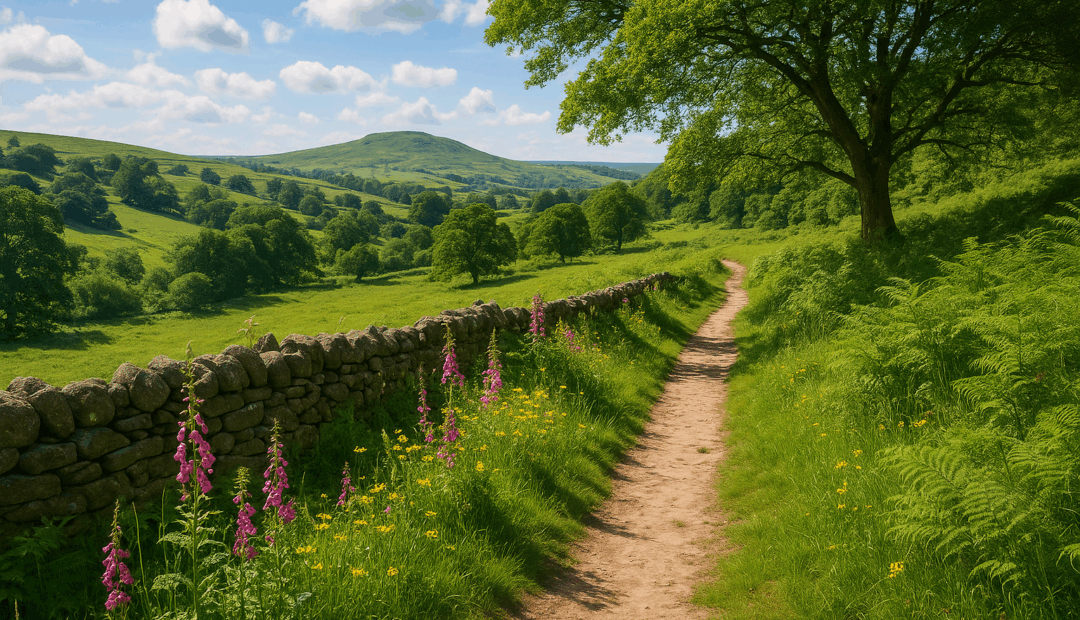
From misty moorlands to dramatic cliffs, ancient forests to rolling countryside — England’s landscapes are made for walking. For nature lovers, there’s no better way to experience the country’s beauty than by lacing up your boots and taking to the trails. Whether you’re after rugged coastal paths, tranquil riverside strolls, or mountain climbs with panoramic views, England’s walking routes are as diverse as they are breathtaking.
Introduction: England’s Timeless Connection to the Outdoors
Walking isn’t just a pastime in England — it’s a way of life. For centuries, poets, painters, and wanderers have found inspiration in its countryside, from the windswept Yorkshire Dales to the green valleys of Devon. Each footpath tells a story: of ancient trade routes, pilgrim journeys, and natural wonders shaped by time.
What makes walking in England truly special is accessibility. You don’t need to be a mountaineer or marathoner to explore its trails — there’s something for everyone, from gentle woodland paths to multi-day adventures that hug dramatic coastlines or meander through pastoral farmlands. Along the way, expect cozy pubs, charming villages, and a hospitality that’s uniquely English.
Here are the 10 best walking trails in England for nature lovers, each offering a journey through landscapes that stir the soul and awaken a sense of wonder.
1. South West Coast Path, Cornwall and Devon
Length: 630 miles (1,014 km)
Difficulty: Moderate to challenging
Best For: Coastal views, wildlife, and seaside villages
The South West Coast Path is the crown jewel of England’s long-distance walks. Stretching from Minehead in Somerset to Poole Harbour in Dorset, it hugs the rugged coastline of Devon and Cornwall, revealing some of the most spectacular scenery in the country.
Picture golden beaches, soaring cliffs, hidden coves, and turquoise waters crashing below. The section between St Ives and Penzance is especially stunning, with wildflowers carpeting the clifftops in spring and seals basking on the rocks below. Every few miles, a coastal village awaits — perfect for refueling with fresh crab sandwiches or Cornish pasties.
Nature Highlights: Keep your binoculars ready for dolphins, puffins, and even basking sharks in summer months.
Tips for Walkers:
- Break the trail into sections — most walkers tackle it in stages over several holidays.
- Pack layers; coastal weather changes fast.
- Don’t miss the Tintagel Castle ruins — legendary home of King Arthur.
Did You Know?
The South West Coast Path follows old coastguard routes used to watch for smugglers in the 19th century!
2. The Lake District National Park Trails
Length: Various routes from 3 miles to 50+ miles
Difficulty: Easy to strenuous
Best For: Mountains, lakes, and poetic inspiration
The Lake District is a dream come true for walkers. A UNESCO World Heritage Site, it’s England’s mountain heart — a land of deep blue lakes and towering peaks that have inspired writers like Wordsworth and Beatrix Potter.
Popular walks include Catbells, an accessible but rewarding summit above Derwentwater, and the challenging Helvellyn ridge, where the famous Striding Edge offers exhilarating views for the brave. For those seeking peace, the lakeside paths of Buttermere and Grasmere are perfect for quiet reflection.
Nature Highlights: Herdwick sheep, red squirrels, and mountain foxgloves color the fells in spring and summer.
Tips for Walkers:
- Start early to avoid crowds on popular routes.
- Stay in a local B&B or lakeside inn for that quintessential Cumbrian charm.
- Always check mountain weather forecasts — it can change in minutes.
Did You Know?
William Wordsworth’s famous poem “I Wandered Lonely as a Cloud” was inspired by a walk near Ullswater when he saw a field of daffodils dancing in the breeze.
3. Hadrian’s Wall Path, Northern England
Length: 84 miles (135 km)
Difficulty: Moderate
Best For: History buffs and scenic countryside
Hadrian’s Wall Path follows the ancient Roman fortification built in AD 122 to mark the northern frontier of the Roman Empire. Today, it’s a UNESCO World Heritage Site and one of the most fascinating walks in England.
The trail stretches from Wallsend near Newcastle to Bowness-on-Solway, crossing rolling hills, farmland, and windswept moors. Along the way, you’ll encounter Roman forts, milecastles, and archaeological sites that reveal stories from nearly two millennia ago.
Nature Highlights: Skylarks and curlews flit above the grassy ridges, while wildflowers bloom in summer along the wall.
Tips for Walkers:
- Best walked east to west for prevailing winds at your back.
- Don’t rush — take time to explore forts like Housesteads and Vindolanda.
- Comfortable walking shoes are essential for the uneven terrain.
Did You Know?
Hadrian’s Wall once stretched 73 miles across England — built by 15,000 Roman soldiers in just six years.
4. The Cotswold Way
Length: 102 miles (164 km)
Difficulty: Moderate
Best For: Rolling countryside and charming villages
Few places capture the idyllic English countryside quite like the Cotswolds. The Cotswold Way stretches from Chipping Campden to Bath, weaving through gentle hills, ancient beech woodlands, and honey-colored stone villages.
Expect postcard-perfect scenes of dry-stone walls, grazing sheep, and historic market towns. Broadway Tower offers panoramic views across 13 counties, while villages like Winchcombe and Painswick invite you to linger over afternoon tea or cider in a traditional pub.
Nature Highlights: Bluebell woods in spring, wild orchids in summer, and golden leaves in autumn.
Tips for Walkers:
- Book cozy inns or cottages along the way — many are walker-friendly.
- Pack light; there are luggage transfer services for long-distance hikers.
- Visit in spring or autumn for fewer crowds and vivid colors.
Did You Know?
The Cotswold Way follows part of the historic salt route used by traders in medieval times.
5. Yorkshire Dales National Park Trails
Length: Numerous routes from 5 miles to multi-day treks
Difficulty: Easy to strenuous
Best For: Limestone scenery, waterfalls, and traditional villages
The Yorkshire Dales offer raw, untamed beauty. Think green valleys, dry-stone walls, sheep-dotted hills, and centuries-old barns. Popular trails include the Three Peaks Challenge (Pen-y-ghent, Whernside, and Ingleborough) and the Malham Cove Circular, leading to one of England’s most dramatic natural amphitheaters.
The waterfalls of Aysgarth and Ingleton add charm to the rugged landscape, while villages like Grassington and Hawes provide a warm Yorkshire welcome.
Nature Highlights: Peregrine falcons near Malham Cove and wildflowers in limestone meadows.
Tips for Walkers:
- Carry a map — mobile signal can be patchy in the dales.
- Try local cheese from the Wensleydale Creamery.
- Waterproof boots are essential; paths can get muddy year-round.
Did You Know?
Malham Cove’s limestone pavement featured in Harry Potter and the Deathly Hallows – Part 1.
6. The Peak District National Park
Length: Hundreds of trails across 555 square miles
Difficulty: Easy to challenging
Best For: Variety — moors, valleys, and historic villages
As England’s first national park, the Peak District is a walker’s paradise. From the rugged moorlands of the Dark Peak to the gentle hills of the White Peak, it offers trails for all abilities.
Highlights include the Kinder Scout Plateau, where the right-to-roam movement began, and Dovedale, with its iconic stepping stones across the River Dove. Bakewell, home of the famous tart, makes a delicious pit stop.
Nature Highlights: Red grouse, curlews, and vibrant heather in late summer.
Tips for Walkers:
- Take the train to Edale — the gateway to many great walks.
- Bring a picnic; scenic spots abound.
- Respect farmland — stick to marked trails.
Did You Know?
The 1932 Kinder Scout Mass Trespass helped establish public access to the English countryside.
7. The New Forest National Park
Length: 143,000 acres of woodland and heathland
Difficulty: Easy to moderate
Best For: Ancient forests, ponies, and wildlife spotting
The New Forest, once a royal hunting ground, is now a tranquil haven of ancient oaks, wild ponies, and peaceful glades. Walking here feels like stepping into a storybook.
Choose from gentle woodland strolls or longer circular walks linking quaint villages like Lyndhurst and Brockenhurst. The changing light through the forest canopy and the sight of deer grazing at dawn make it a photographer’s dream.
Nature Highlights: Free-roaming New Forest ponies, deer, and rare birds like the nightjar.
Tips for Walkers:
- Visit in autumn for fiery foliage and fewer crowds.
- Keep a safe distance from wildlife.
- Explore by bike too — many flat gravel paths are cycle-friendly.
Did You Know?
The New Forest ponies have roamed freely here for over 1,000 years!
8. Northumberland Coast Path
Length: 62 miles (100 km)
Difficulty: Easy to moderate
Best For: Seaside solitude and historic castles
The Northumberland Coast Path offers serenity in spades. It runs from Cresswell to Berwick-upon-Tweed, following a stretch of coastline famed for its wild beauty and rich history.
You’ll pass sweeping sandy beaches, dramatic dunes, and the iconic Bamburgh Castle, rising like a sentinel above the sea. Don’t miss the Holy Island of Lindisfarne, reachable at low tide by a causeway — just check the tide times!
Nature Highlights: Puffins on the Farne Islands and seals basking on the beaches.
Tips for Walkers:
- Bring binoculars for birdwatching.
- Always check tide schedules for safe passage.
- Stay overnight in coastal villages like Seahouses or Craster.
Did You Know?
Bamburgh Castle was once the seat of the kings of ancient Northumbria.
9. The South Downs Way
Length: 100 miles (160 km)
Difficulty: Moderate
Best For: Rolling hills, chalk cliffs, and open skies
Stretching from Winchester to Eastbourne, the South Downs Way offers one of England’s most scenic long-distance walks. It crosses the chalk hills of the South Downs National Park, revealing endless horizons, wildflower meadows, and views of the English Channel.
Highlights include the Seven Sisters Cliffs, a series of dazzling white chalk cliffs, and tranquil villages like Alfriston. The trail is well-marked, making it great for beginners.
Nature Highlights: Skylarks, butterflies, and rare orchids in summer.
Tips for Walkers:
- The western section near Winchester is quieter; the eastern offers dramatic sea views.
- Carry plenty of water; some stretches are exposed.
- Stop at local vineyards for a taste of English sparkling wine.
Did You Know?
The Seven Sisters cliffs are eroding about 30–40 cm every year, constantly reshaping England’s southern edge.
10. The Thames Path
Length: 184 miles (296 km)
Difficulty: Easy
Best For: Riverside scenery and historic towns
The Thames Path follows England’s most famous river from its source in the Cotswolds to the Thames Barrier in London. It’s a gentle, ever-changing walk through meadows, locks, and vibrant towns.
Enjoy peaceful countryside near Oxford, watch swans glide past Windsor Castle, and end with London’s skyline rising before you. Perfect for leisurely days and those wanting a taste of both rural and urban England.
Nature Highlights: Swans, herons, kingfishers, and riverside wildflowers.
Tips for Walkers:
- Ideal for all abilities — flat and well-maintained.
- Public transport links allow you to walk it in sections.
- Best enjoyed in spring or early autumn.
Did You Know?
The Thames is the longest river entirely in England — stretching over 215 miles from source to sea.
7 FAQs about Walking Trails in England
1. Do I need permits to walk these trails?
Most walking trails in England are open to the public and don’t require permits. However, some areas, such as private estates, nature reserves, or sensitive wildlife zones, may have restricted access or require permission. Trails like Hadrian’s Wall Path, South West Coast Path, and the Cotswolds are generally free to use. Always follow local signage, respect farmland rights, and stay on marked paths to preserve the landscape and avoid trespassing.
2. What’s the best season for walking in England?
The most comfortable times for walking are spring (April–June) and autumn (September–October), when the weather is mild, and landscapes are at their most beautiful with wildflowers or autumn foliage. Summer offers longer daylight hours but can be crowded on popular trails, while winter walks are quieter and scenic but require warm clothing, shorter routes, and careful planning due to limited daylight and potentially muddy or icy paths.
3. Are there guided walking tours available?
Yes, guided and self-guided walking tours are widely available across England. Many tour operators provide packages that include accommodation, maps, luggage transfers, and local advice. Guided walks are great for cultural insights, safety, and learning about the region’s history. Popular areas for guided experiences include the Cotswolds, South West Coast Path, Lake District, and Yorkshire Dales, offering a mix of scenic hiking, charming villages, and expert local knowledge.
4. What gear do I need for walking in England?
Essential gear includes waterproof hiking boots, layered clothing, and a reliable waterproof jacket. Trekking poles are useful on hilly or uneven terrain, and a backpack should carry water, snacks, and a first aid kit. Maps or a navigation app are crucial, and a small amount of cash is handy for rural pubs or shops. Weather in England can change quickly, so being prepared ensures comfort and safety throughout your walks.
5. Are these trails family-friendly?
Many English walking trails are suitable for families, including the Thames Path, New Forest trails, and sections of the South Downs Way. These routes often feature gentle gradients, scenic picnic areas, and easy access to towns or visitor centers. Short circular walks are ideal for young children. Always check the trail length, facilities, and safety, especially for strollers or small kids, and plan breaks to make the walk enjoyable for all ages.
6. Can I bring my dog on the trails?
Dogs are welcome on most public footpaths and walking trails in England. Keep your dog on a lead near livestock or wildlife to prevent accidents. Many pubs, cafés, and accommodations along popular trails are dog-friendly, making it easier to include your pet in your adventure. Bring water and snacks for your dog, especially on exposed or long routes like the South Downs Way, and always clean up after them to respect the environment.
7. What are the best apps or maps for navigation?
For navigation, Ordnance Survey Maps (OS Maps), Komoot, and AllTrails are excellent options. They provide detailed offline maps, elevation data, route planning, and points of interest. GPS features help track progress even in remote areas, but signal can be unreliable in rural landscapes. Carrying a physical map as a backup is strongly recommended to ensure you don’t get lost and can safely enjoy trails without depending entirely on technology.
Final Words: Step into England’s Living Landscape
Walking in England is more than an activity — it’s a way of connecting with history, nature, and the soul of the land. Each trail tells a story, whether it’s the footsteps of Roman soldiers along Hadrian’s Wall, the poetic calm of the Lake District, or the sea-swept cliffs of Cornwall.
For nature lovers, these trails offer a timeless invitation to slow down and savor life’s simplest joys — the rustle of leaves, the song of a skylark, the scent of wildflowers after rain. So grab your boots, follow the waymarks, and let England’s countryside remind you of the beauty that unfolds one step at a time.