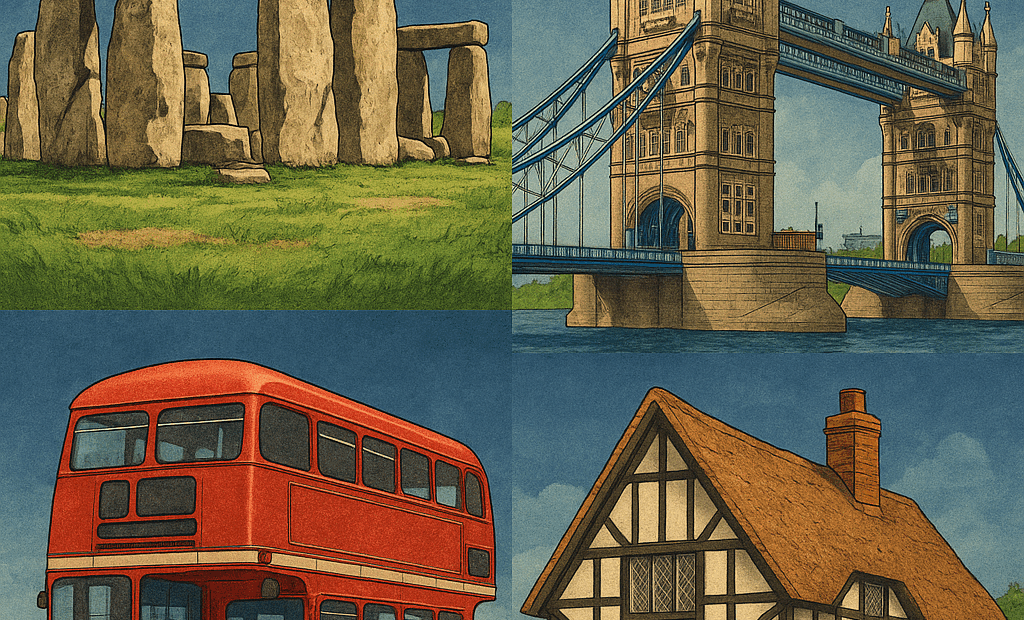
From the chime of Big Ben to the aroma of afternoon tea, England’s cultural identity lives in its enduring traditions, architecture, and artistry. These timeless symbols are not relics of the past — they are living stories of pride, heritage, and evolution. Together, they reveal how a nation steeped in history continues to inspire the world through grace, unity, and imagination.
Introduction
England stands as a tapestry of royalty, culture, art, and resilience, woven over centuries of change. From medieval monarchs to modern democracy, the nation has continually reinvented itself without losing sight of its roots. The symbols of English heritage — both grand and everyday — define this enduring balance between tradition and progress.
Whether it’s the Union Jack fluttering in the wind, the quiet beauty of the countryside, or the literary brilliance that shaped global thought, each symbol carries meaning that transcends time. Together, they form an identity that is uniquely and unmistakably English.
1. The Union Jack – Symbol of Unity and National Identity
Origins and Meaning
The Union Jack, officially adopted in 1801, embodies the unification of three nations:
- The Cross of St. George (England)
- The Cross of St. Andrew (Scotland)
- The Cross of St. Patrick (Ireland)
This tricolour design represents solidarity and cooperation, signifying a collective strength under one crown.
Cultural Significance
- The flag is proudly displayed on embassies, ships, and sporting events across the world.
- It reflects both patriotism and inclusivity, representing every citizen of the United Kingdom.
- Over time, it has also become a cultural icon, influencing fashion, music, and design.
Legacy
The Union Jack remains an emblem of unity and pride, symbolising England’s capacity to adapt and lead without losing its historical identity.
2. The English Monarchy – A Living Link Between Past and Present
A Thousand-Year Legacy
The British monarchy is more than an institution — it’s a living chronicle of English civilisation. From William the Conqueror to Elizabeth II, monarchs have influenced every aspect of the nation’s life: governance, religion, art, and diplomacy.
Tradition and Continuity
- Ceremonies like the State Opening of Parliament and Trooping the Colour represent continuity amid change.
- Royal palaces such as Buckingham Palace and Windsor Castle stand as architectural tributes to England’s dynastic heritage.
Modern Role
In today’s world, the monarchy symbolises stability and unity.
- Queen Elizabeth II’s reign reflected service, restraint, and global respect.
- King Charles III continues this tradition, blending environmental advocacy with a commitment to public duty.
The monarchy remains a bridge between the past and present — a reminder that leadership can evolve while honouring legacy.
3. Big Ben and the Houses of Parliament – The Voice of Democracy
Architectural Marvel
Rising proudly over the Thames, Big Ben — officially the Elizabeth Tower — is one of the most recognised landmarks in the world. Built in 1859, its precise clock mechanism and melodious chimes symbolise order and endurance.
Parliamentary Symbolism
Next to it stands the Palace of Westminster, home to the Houses of Parliament, where democracy and debate have shaped modern governance. The site symbolises freedom of speech and representative politics, cornerstones of English identity.
Cultural Resonance
Big Ben’s chimes have marked moments of national triumph and sorrow — from wartime resilience during the Blitz to celebratory New Year’s Eves. Together, they embody the heartbeat of English democracy and moral steadfastness.
4. Afternoon Tea – The Ritual of English Elegance
A Tradition Born of Leisure
Introduced in the 1840s by Anna, Duchess of Bedford, afternoon tea began as a light refreshment between meals. It soon became an institution representing English politeness and refinement.
The Elements of a Classic Tea
- Fine loose-leaf tea, often Earl Grey or Darjeeling.
- Scones with clotted cream and strawberry jam.
- Finger sandwiches filled with cucumber or smoked salmon.
- Petite pastries and cakes, often enjoyed in elegant tea rooms.
Cultural Significance
More than a culinary custom, afternoon tea symbolises balance, civility, and companionship. It captures the English art of slowing down — savouring a moment of peace in a fast-moving world.
Modern Revival
While rooted in Victorian society, afternoon tea continues to evolve, offered in luxury hotels and boutique cafes alike. It remains one of England’s most beloved social rituals.
5. The Red Telephone Box and Double-Decker Bus – Everyday Icons of England
Design Origins
- The red telephone box, introduced in 1924 by Sir Giles Gilbert Scott, was designed to be both practical and visually appealing.
- The red double-decker bus, especially the Routemaster model, became the face of London’s public transport system.
Cultural Role
- Both icons represent accessible design and national charm.
- They embody the English ability to merge function with aesthetics.
- Even as technology evolves, they remain part of England’s visual identity.
Symbolic Value
Preserved and repurposed, many old telephone boxes now serve as community libraries or art displays, while double-decker buses continue to symbolise movement, innovation, and nostalgia.
6. The English Countryside – The Soul of Rural England
Timeless Beauty
Beyond its cities lies England’s heart — the countryside. From the rolling meadows of the Cotswolds to the dramatic peaks of the Lake District, these landscapes are immortalised in literature, art, and folklore.
Cultural and Ecological Role
- The countryside preserves heritage farming traditions and rural craftsmanship.
- It sustains local economies through eco-tourism and agriculture.
- Its beauty has inspired poets like Wordsworth, who saw nature as a moral and spiritual force.
Symbol of Peace and Identity
The countryside represents a return to simplicity and belonging. It’s not just geography — it’s a living memory of England’s connection to land, history, and nature.
7. The English Language and Literature – Words That Shaped the World
A Global Legacy
The English language began as a mix of Anglo-Saxon, Norman, and Latin influences. Over time, it evolved into the world’s most widely spoken and studied tongue, reflecting England’s cultural influence and adaptability.
Literary Greats
England’s literary tradition defines its intellectual spirit:
- Geoffrey Chaucer — laid the foundation for English storytelling.
- William Shakespeare — captured the universal human experience.
- Jane Austen — portrayed wit, class, and emotion.
- Charles Dickens — gave voice to the struggles of ordinary people.
Cultural Power
Through literature, theatre, and education, the English language has become a cultural ambassador, shaping thought, creativity, and dialogue across the world.
FAQs
1. What does the Union Jack represent in English culture?
The Union Jack represents the unity of England, Scotland, and Ireland under one kingdom. Its design merges three distinct national crosses, symbolising harmony among diversity. Over the centuries, it has evolved from a military banner to a global emblem of British pride. It now adorns embassies, ships, and even fashion, signifying both patriotism and inclusivity. Beyond politics, the flag embodies the spirit of unity and shared identity that continues to define modern England.
2. Why is the monarchy central to English identity?
The monarchy is one of the oldest continuous institutions in the world and a cornerstone of English identity. It symbolises stability, continuity, and national unity, offering a sense of permanence in times of change. From royal ceremonies like coronations to the monarchy’s charitable work, it plays both a ceremonial and cultural role. Figures like Queen Elizabeth II strengthened its modern relevance through dignity and duty, while King Charles III reflects adaptation and responsibility in a changing society.
3. What makes Big Ben and Parliament such powerful national symbols?
Big Ben and the Houses of Parliament represent the essence of English democracy and governance. Big Ben’s accuracy and its iconic chimes mark the passage of time and resilience through centuries of change. The Palace of Westminster, meanwhile, embodies transparency and representation — principles that define British democracy. Together, they remind citizens of England’s commitment to justice, debate, and the rule of law, serving as enduring symbols of civic pride and public accountability.
4. How did afternoon tea become an enduring English tradition?
The custom of afternoon tea began in Victorian England as a remedy for hunger between meals, later evolving into a refined social ritual. Over time, it became synonymous with elegance, leisure, and hospitality. Tea houses and hotels across England continue to preserve this tradition with modern flair. The ritual is more than food and drink — it’s a pause for reflection and connection, a reminder of the English love for ceremony, conversation, and calm amid daily life.
5. Why are red telephone boxes and double-decker buses cultural icons?
The red telephone box and double-decker bus embody England’s ability to merge practicality with enduring design. Both originated in the early 20th century but remain symbols of identity today. While mobile technology replaced the telephone box’s original purpose, it now serves as an art piece or mini-library. The Routemaster bus, meanwhile, remains a moving emblem of London. Their nostalgic charm reflects England’s balance between innovation and preservation, reminding us how design can shape culture.
6. What makes the English countryside such an important part of heritage?
The English countryside reflects the nation’s pastoral beauty, environmental heritage, and cultural continuity. Its landscapes — the Cotswolds, Yorkshire Dales, Lake District — represent tranquillity, community, and endurance. For centuries, it has inspired poets, artists, and thinkers who saw nature as central to human happiness. Beyond aesthetics, it supports farming and tourism, sustaining local economies. It stands as a symbol of balance and identity, embodying the English ideal of harmony with nature and history.
7. How has English literature influenced global culture?
English literature has shaped the world’s understanding of art, morality, and emotion. From Shakespeare’s universal dramas to Dickens’s social commentaries, it has chronicled humanity’s struggles and triumphs. It introduced genres, phrases, and archetypes still used today. Beyond storytelling, it promotes empathy and self-reflection. English, as a language of creativity and diplomacy, has become a global cultural bridge, connecting people through ideas, emotion, and shared imagination — a lasting legacy of England’s intellectual heritage.
Conclusion: The Enduring Spirit of England
England’s identity lives in its continuity — a nation that treasures its history yet thrives in reinvention. Its symbols are not static; they evolve, carrying forward the pride of generations. Each landmark, tradition, and custom is a story of endurance and grace, uniting people across centuries.
From the regal authority of the monarchy to the gentle warmth of tea rituals, from the green countryside to the language that shaped the modern world, England’s heritage remains both rooted and dynamic. It teaches that tradition and modernity need not compete — they can coexist, enriching one another. The result is a culture that remains timeless, admired, and profoundly human.