For over a thousand years, royal pageantry has defined Britain’s identity. From the solemn splendour of coronations to the spirited marches of Trooping the Colour, each historic ceremony sustains the living heart of English tradition — preserving symbols of monarchy, continuity, and national pride in an ever-changing world.
Introduction: Living Symbols of an Ancient Monarchy
Few nations celebrate their history with as much grace and grandeur as the United Kingdom. Its royal ceremonies are more than events — they are living enactments of values such as duty, loyalty, faith, and unity. Every trumpet blast, embroidered robe, and solemn procession reflects a story written across centuries.
British royal rituals are an unbroken thread linking medieval kingship to modern constitutional monarchy. While technology and democracy have transformed society, the Crown’s ceremonial role continues to command global fascination. These customs survive because they embody both continuity and adaptability — the essence of Britain’s soft power and cultural mystique.
Below are ten enduring ceremonies that keep English royal culture alive — each one a vibrant bridge between past and present.
1. The Coronation of the Monarch
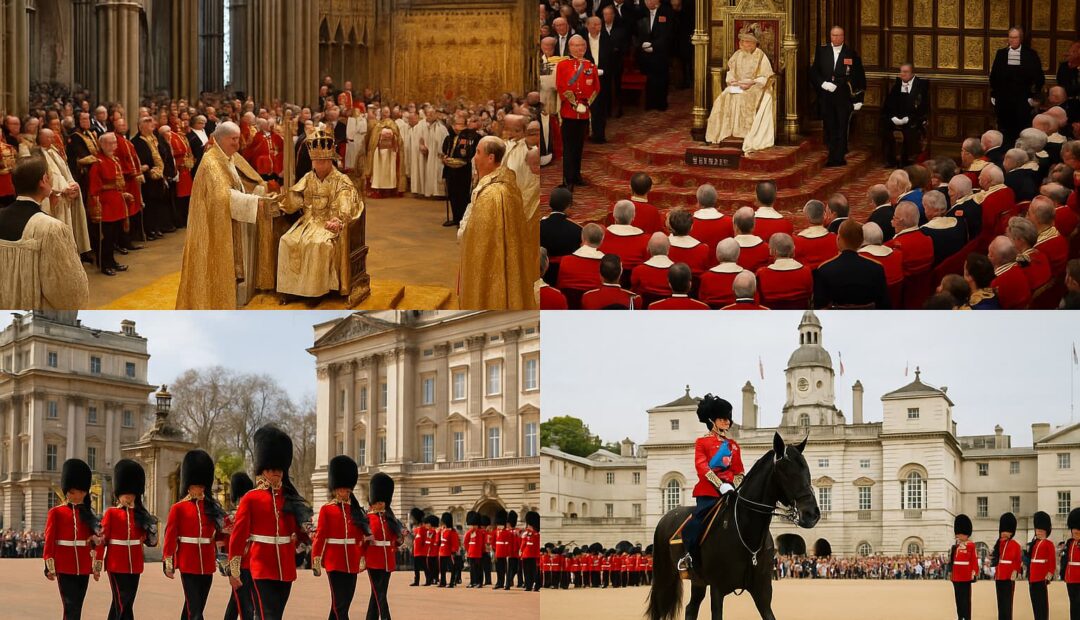
The coronation is the cornerstone of royal ceremonial life — an extraordinary blend of religion, tradition, and statehood. Since William the Conqueror’s coronation in 1066, every English monarch (bar a few exceptions) has been crowned in Westminster Abbey, the nation’s spiritual heart.
The Ritual
The Archbishop of Canterbury presides, anointing the sovereign with sacred oil — a symbol of divine blessing. The monarch is vested with regalia:
- The St. Edward’s Crown – representing sovereignty.
- The Sceptre with the Cross – symbolising temporal power and justice.
- The Orb – denoting moral and spiritual authority.
- The Coronation Ring – the “wedding ring” of the monarch to their people.
Cultural Significance
While religious in form, the coronation is fundamentally national. It brings together the government, military, Commonwealth representatives, and citizens in a shared expression of unity. Queen Elizabeth II’s 1953 coronation was the first to be televised, transforming it into a global spectacle watched by 27 million Britons and millions abroad.
The 2023 coronation of King Charles III introduced sustainable and inclusive themes — proof that even the oldest ceremony can evolve with its time.
2. The State Opening of Parliament ️
Held annually, this ceremony symbolises the constitutional partnership between Crown and Parliament. The monarch’s presence reminds all that while the King reigns, Parliament governs — a central principle of British democracy.
Key Traditions
- The monarch travels in the Gold State Coach, escorted by the Household Cavalry.
- The Imperial State Crown and ceremonial robes signify authority.
- The Gentleman Usher of the Black Rod summons MPs from the House of Commons. In a symbolic act of independence, the Commons’ doors are slammed in their face before entry is permitted.
- The King’s Speech outlines the government’s legislative agenda, written by ministers but read by the monarch.
Historical Background
Originating in the 16th century, the ceremony evolved from medieval councils where the monarch personally addressed subjects. Today, it reflects Britain’s constitutional equilibrium — a monarchy that reigns but does not rule, wrapped in centuries of symbolism.
3. The Changing of the Guard at Buckingham Palace
A ceremony of precision and discipline, the Changing of the Guard turns a routine military duty into one of Britain’s most recognisable spectacles.
The Ceremony
Held at Buckingham Palace, the ritual involves the Old Guard handing over responsibility for palace security to the New Guard, accompanied by a full military band. The soldiers belong to elite regiments such as the Grenadier Guards, Coldstream Guards, and Scots Guards.
Symbolism
Beyond its pomp, this tradition underscores the monarchy’s historical link to the armed forces. It is a public demonstration of loyalty, honour, and readiness — qualities that have safeguarded the Crown for centuries.
Originating in the 17th century, it remains a living reminder that service and ceremony can coexist seamlessly in British identity.
4. Trooping the Colour ️
Each June, London bursts into colour and sound for Trooping the Colour, the official celebration of the monarch’s birthday. The term “colour” refers to regimental flags once used to identify units on the battlefield.
Highlights
- Over 1,400 soldiers, 200 horses, and 400 musicians participate.
- The monarch inspects the troops from horseback or a carriage.
- The event culminates with an RAF flypast over Buckingham Palace, watched by the royal family from the balcony.
Why It Matters
This ceremony began in the 18th century under King George II and symbolises the unity between monarch and army. It remains a dazzling showcase of precision, loyalty, and continuity — an annual reaffirmation of service to Crown and country.
5. Garter Day Procession at Windsor Castle ⚔️
Founded by Edward III in 1348, the Order of the Garter is Britain’s oldest and most prestigious order of chivalry. Each June, members assemble for Garter Day, walking in elaborate robes from Windsor Castle to St. George’s Chapel.
Historical Roots
Legend holdat Edward III created the order after a noblewoman’s garter slipped during a ball. To defuse embarrassment, he declared, “Honi soit qui ms thal y pense” (“Shame on him who thinks evil of it”) — now the order’s motto.
Significance
Membership, limited to 24 Companions, honours outstanding public or military service. The event encapsulates medieval ideals of honour and knighthood, preserved in a modern monarchy that values duty above privilege.
6. The Royal Maundy Service ✝️
Held every Maundy Thursday before Easter, this deeply spiritual ceremony embodies humility and Christian service. The monarch presents Maundy money — special silver coins — to elderly men and women who have served their communities.
Origins
Rooted in the biblical account of Jesus washing his disciples’ feet, the tradition began under King John (1210s) and evolved under Charles II into a ceremony of symbolic giving rather than literal washing.
Modern Practice
The number of recipients equals the monarch’s age, representing years of life and service. The ceremony rotates between cathedrals across the UK, connecting the Crown to people of all regions and faiths.
7. The Ceremony of the Keys at the Tower of London
Every night for over 700 years, the gates of the Tower of London are locked in a ritual known as the Ceremony of the Keys — the oldest unbroken military tradition in the world.
Procedure
At precisely 9:53 p.m., the Chief Yeoman Warder, holding the King’s keys, locks the main gates. Guards challenge him with the question:
“Who comes there?”
“The Keys.”
“Whose Keys?”
“King Charles’s Keys.”
The gates are locked, a salute is given, and the night is sealed with “God preserve the King.”
Meaning
Once a vital act of security, it now symbolises eternal vigilance, order, and respect for authority. It continues daily — even through wars and pandemics — as a mark of resilience.
8. Remembrance Sunday at the Cenotaph ️
Observed on the second Sunday of November, Remembrance Sunday honours those who lost their lives in wars. The monarch leads the nation in reflection at the Cenotaph, London’s most sacred war memorial.
Ceremonial Elements
- Two minutes of silence at 11:00 a.m.
- Laying of wreaths by the King, political leaders, and veterans.
- March past of military personnel and families of the fallen.
Cultural Impact
Since its creation after World War I, this ceremony has united generations in shared grief and gratitude. It symbolises how the monarchy remains central to the nation’s collective conscience — linking remembrance, duty, and unity.
9. Royal Ascot
Founded in 1711 by Queen Anne, Royal Ascot is both a premier sporting event and a royal institution. Each June, it transforms Ascot Racecourse into a dazzling display of elegance and ceremony.
The Royal Connection
Every day begins with a royal carriage procession. The King, Queen, and family members enter through the Golden Gates, welcomed by a 21-gun salute. The five-day event features world-class races such as the Gold Cup and Queen Anne Stakes.
Beyond the Races
Royal Ascot represents the refinement and social rituals of English high society. Strict dress codes — morning suits, top hats, and elaborate fascinators — preserve its exclusivity and charm.
10. The Swan Upping on the River Thames
A ceremony both quaint and ecological, Swan Upping is held every July to count and mark the swans on the River Thames. Historically, all unmarked mute swans belonged to the Crown, a symbol of wealth and privilege.
Modern Purpose
Today, the ceremony is led by the King’s Swan Marker and the Vintners’ and Dyers’ Companies. The process monitors the health and breeding patterns of swans, reinforcing royal stewardship over wildlife and the environment.
It’s a rare blend of medieval ritual and modern conservation — a reminder that heritage and sustainability can coexist harmoniously.
FAQs: Understanding the Living Legacy of Royal Ceremonies
1. What makes British royal ceremonies unique compared to other monarchies?
British royal ceremonies stand apart because of their continuous evolution rather than preservation in isolation. While most monarchies modernised by abandoning ritual, Britain blended ancient symbolism with constitutional democracy. Events such as the Coronation and Trooping the Colour are not relics — they are living performances of national history, carried out with precision and relevance even in the digital era.
2. Why is the Coronation considered the most sacred royal ceremony?
The Coronation is the ultimate act of royal consecration — a blend of divine ritual, national unity, and constitutional symbolism. It fuses religious ceremony, political order, and heritage in one moment. Since 1066, the Archbishop of Canterbury’s anointing of the monarch has represented both spiritual legitimacy and the people’s recognition of lawful authority, bridging church, state, and citizenry.
3. How do royal ceremonies reflect Britain’s social and political values?
Every royal ceremony mirrors the British ideal of continuity within change. The monarchy may no longer wield political power, but these rituals reinforce the Crown’s symbolic role — to unify, represent, and inspire. Ceremonies such as the State Opening of Parliament underline the balance of monarchy and democracy, while Remembrance Sunday expresses compassion, gratitude, and service to the common good.
4. What role does the military play in royal traditions?
The armed forces are integral to the Crown, historically sworn to defend it. Ceremonies like Trooping the Colour, the Changing of the Guard, and the Ceremony of the Keys demonstrate discipline, duty, and continuity. They remind the public that Britain’s military traditions are inseparable from national identity, service, and ceremonial dignity.
5. How have modern monarchs adapted ancient customs to modern times?
Recent monarchs have reinterpreted these customs with subtle modern touches — eco-friendly coronation regalia, inclusivity in church services, live global broadcasts, and digital public engagement. King Charles III’s 2023 Coronation, for instance, introduced multi-faith prayers and sustainable craftsmanship, signalling that tradition survives by evolving, not by resisting change.
6. Are these ceremonies purely symbolic or do they hold practical significance?
While symbolic in essence, these ceremonies serve a sociopolitical function — reaffirming the monarchy’s relevance and connecting citizens through shared ritual. They foster tourism, promote soft power, and reinforce Britain’s global image as a nation where history remains visible, celebrated, and alive. Symbolism here is not hollow theatre; it is cultural glue.
7. How do royal ceremonies influence Britain’s cultural and global image?
Royal rituals project Britain’s identity as a nation of tradition, elegance, and endurance. The precision of Trooping the Colour, the solemnity of Remembrance Sunday, or the grace of Royal Ascot portray a monarchy that embodies continuity, pageantry, and dignity. These events attract global audiences, strengthening the UK’s cultural diplomacy and tourism economy while preserving its moral and historical authority.
Final Thoughts: Heritage as a Mirror of Modern Britain
Royal ceremonies are more than majestic displays; they are narratives of endurance, performed generation after generation with the same rhythm and reverence. Each coronation oath, each step in the Garter Procession, and each salute on the parade ground tells a story of a people who understand that identity is not only remembered — it is ritually renewed.
What keeps these traditions alive is not merely nostalgia, but relevance. They affirm values that continue to shape British life: service before self, unity over division, and reverence for continuity amidst change. Even as Britain evolves into a diverse, globalised society, these ceremonies serve as a compass — reminding citizens where they come from and what holds them together.
From the candlelit corridors of the Tower of London to the sunlit grandeur of Windsor, the echoes of the past still resound in every royal ritual. They endure because they connect history with heart, blending splendour with symbolism. In that blend lies the secret of English royal culture — a living, breathing heritage that continues to inspire the world with its grace, resilience, and timeless dignity.