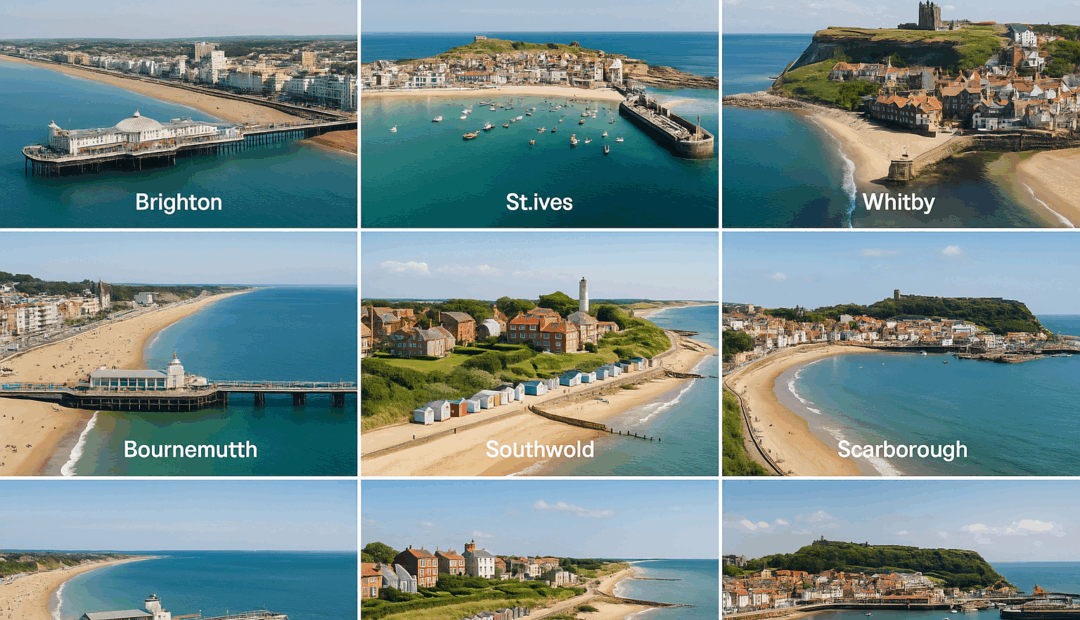
England’s seaside towns offer more than just sand and sea—they are full of history, culture, and character. From Brighton’s buzzing pier to Southwold’s colourful beach huts, every town tells a unique story. This guide takes you through the best English beach towns, with highlights, tips, and fascinating facts that bring the coast to life.
Introduction
With more than 11,000 miles of coastline, England’s shores are rich in diversity. Dramatic cliffs, sandy bays, fishing harbours, and lively promenades make them popular with families, couples, and solo travellers alike.
Beyond their postcard beauty, these towns carry legacies of art, literature, and maritime traditions. Whether you’re in search of surfing hotspots, cultural escapes, or hidden gems, England’s beach towns promise unforgettable adventures.
Best Beach Towns in England
Brighton – The Cultural Seaside Capital
Brighton is famous for its pebbled beach, vibrant pier, and energetic cultural scene. Just an hour from London, it blends Victorian charm with modern creativity. The Royal Pavilion, quirky shops in The Lanes, and buzzing nightlife make it one of the most popular coastal escapes.
Why Visit Brighton?
- Brighton Palace Pier with funfair rides
- Iconic Royal Pavilion with Indo-Saracenic design
- Independent shops, street art, and food stalls
Interesting Fact: Brighton became one of the UK’s first seaside resorts in the 18th century when King George IV made it fashionable.
St Ives, Cornwall – An Artist’s Paradise
St Ives is Cornwall’s jewel, known for golden beaches and a thriving art scene. Its light and scenery have inspired artists for centuries. Today, it is home to Tate St Ives and the Barbara Hepworth Museum. Sunseekers and surfers flock to Porthmeor Beach, while the harbour remains a postcard-perfect attraction.
Why Visit St Ives?
- Inspiring art galleries and studios
- Surfer-friendly Porthmeor Beach
- Picturesque fishing harbour
Interesting Fact: St Ives once hosted the “St Ives School,” a famous group of modern artists in the mid-20th century, making it globally recognised in the art world.
Whitby, Yorkshire – Gothic Charm by the Sea
Whitby combines sandy beaches with dramatic history. The ruins of Whitby Abbey inspired Bram Stoker’s Dracula. The town is also known for its maritime heritage, bustling harbour, and legendary fish and chips. The 199 steps leading up to the abbey provide a stunning view of the coast.
Why Visit Whitby?
- Explore Whitby Abbey’s ruins
- Walk the historic harbour and 199 steps
- Sample traditional Yorkshire fish and chips
Interesting Fact: Captain James Cook, the famous explorer, learned his trade as an apprentice in Whitby before sailing the world.
Bournemouth, Dorset – Family-Friendly Sunshine Coast
Bournemouth offers seven miles of golden sands, coastal gardens, and lively attractions. Its mild climate makes it a year-round favourite. From surfing to cliff-top walks, the town blends outdoor adventure with seaside relaxation. Families love Bournemouth Pier, aquarium, and Victorian gardens.
Why Visit Bournemouth?
- Expansive sandy beaches
- Bournemouth Pier and Oceanarium
- Cliff walks with panoramic views
Interesting Fact: Bournemouth enjoys more hours of sunshine than most UK towns, earning it the nickname “the Sunshine Coast.”
Southwold, Suffolk – Timeless Seaside Charm
Southwold is a picture-perfect seaside town with pastel-coloured beach huts, a working lighthouse, and a pier that blends tradition with modern amusements. Known for its calm pace, it attracts those seeking a quieter seaside break. Local breweries, cosy pubs, and artisan shops add to the charm.
Why Visit Southwold?
- Iconic beach huts and pier
- Lighthouse with coastal views
- Local craft beers at Adnams Brewery
Interesting Fact: Southwold is one of the few English towns with its own lighthouse right in the centre, guiding sailors since 1889.
Scarborough, Yorkshire – Britain’s First Seaside Resort
Scarborough is considered the birthplace of the English seaside holiday. With two sandy bays, historic amusements, and Scarborough Castle overlooking the town, it’s a blend of history and family fun. Its spa heritage dates back to the 17th century, attracting visitors for relaxation and entertainment.
Why Visit Scarborough?
- Traditional seaside attractions
- Historic Scarborough Castle
- South Bay beach and amusement arcades
Interesting Fact: Scarborough became the UK’s first seaside resort in the 1600s after its natural spa waters were discovered, starting the seaside holiday trend.
Tenby, Pembrokeshire (Honourable Mention)
Though technically in Wales, Tenby is often highlighted in coastal guides. Its pastel-coloured houses, medieval walls, and sandy beaches make it one of Britain’s most photogenic towns.
Interesting Fact: Tenby’s medieval walls, built in the 13th century, remain some of the most complete town walls in Britain.
Fascinating Coastal Facts
- The Jurassic Coast in Dorset is a UNESCO World Heritage Site where fossils date back 185 million years.
- England has over 50 Blue Flag beaches, recognised for cleanliness and safety.
- Whitby hosts an annual Goth Weekend, drawing fans of Dracula and Gothic culture.
- Cornwall records some of the sunniest weather in the UK, making it a summer hotspot.
Tips for Exploring Beach Towns
- Plan ahead: Book early for popular spots like St Ives or Brighton in summer.
- Go off-season: Spring and autumn mean fewer crowds and cheaper stays.
- Dress for all weathers: Coastal weather can change quickly.
- Support local businesses: Eat at family-run fish and chip shops or independent cafés.
- Check tide times: Some coves and walks are only accessible at low tide.
FAQs
1. Which English beach town is closest to London?
Brighton is the easiest seaside escape from London, just over an hour by train. Its lively pier, vibrant nightlife, and cultural landmarks like the Royal Pavilion make it ideal for day trips or weekend breaks. Brighton also offers a mix of shopping, food, and coastal charm that appeals to families, couples, and solo travellers.
2. What’s the best beach town for families?
Bournemouth is one of the best family-friendly seaside destinations in England. With long sandy beaches, a safe promenade, Bournemouth Pier, and the Oceanarium, it offers plenty for children and parents. Southwold is another option, with colourful beach huts, lighthouse tours, and a quieter pace, perfect for families looking for both fun and relaxation.
3. Are there towns with artistic heritage?
Yes, St Ives in Cornwall is world-famous for its artistic heritage. With Tate St Ives and the Barbara Hepworth Museum, it celebrates the town’s creative past. Its special coastal light has attracted artists for centuries, leading to the renowned “St Ives School” of painters. Today, visitors can enjoy galleries, studios, and workshops across the town.
4. Which town is best for history lovers?
Whitby is ideal for history enthusiasts, offering Bram Stoker’s Dracula connections, Captain James Cook’s maritime legacy, and the dramatic ruins of Whitby Abbey. Scarborough also holds historical significance as England’s first seaside resort, famous for its spa waters and castle. Both towns combine rich heritage with coastal beauty, making them excellent destinations for cultural exploration.
5. Where can I surf in England?
Cornwall is the surf capital of England, with Newquay and St Ives drawing beginners and professionals alike. Bournemouth also has good surf spots along its sandy stretch, while Devon’s Woolacombe is another highly rated location. Many of these towns offer surf schools, board rentals, and events, making them welcoming to all skill levels throughout the year.
6. Are English seaside towns affordable?
Affordability varies between towns. Budget-friendly destinations include Scarborough and Whitby, where accommodation and dining options are accessible. Meanwhile, popular hotspots like Brighton and St Ives tend to be pricier, especially in peak summer. Travelling off-season, booking self-catering rentals, or exploring lesser-known coastal towns can help reduce costs while still delivering a memorable seaside holiday.
7. Do seaside towns host events?
Yes, many English seaside towns host vibrant events. Brighton holds the Brighton Festival, a major arts celebration. Whitby is known for its Goth Weekend, attracting fans from around the world, while Scarborough organises regattas and cultural fairs. These festivals bring colour and energy to the coast, making a seaside trip even more exciting and memorable.
Conclusion
England’s coastal towns are much more than beaches—they are gateways to history, art, and culture. From the bohemian buzz of Brighton to the Gothic allure of Whitby, each destination offers something distinct.
Exploring these seaside gems allows travellers to experience local traditions, taste fresh seafood, and enjoy landscapes shaped by centuries of history. Whether for a weekend or a long summer holiday, England’s beach towns promise lasting memories and a true taste of coastal beauty.