England’s countryside is a remarkable blend of dramatic landscapes, peaceful valleys, ancient forests, rugged coastlines, and wide open skies. For nature lovers, walkers, and hikers, it provides endless opportunities to explore trails that combine physical adventure with deep moments of calm. Whether you are looking for steep climbs that test endurance, gentle woodland paths suitable for families, or long-distance routes that reveal centuries of history, England’s National Parks offer a sanctuary for every kind of outdoor traveller.
With 10 National Parks spanning more than 10,000 square miles, these protected areas champion conservation, community, and cultural heritage. They are home to rare wildlife, geological wonders, charming villages, and heritage sites dating back thousands of years. Each National Park has its own identity — from the rugged, wind-carved peaks of the Lake District to the sweeping heather moorlands of the North York Moors and the chalk escarpments of the South Downs. Walking through these parks is more than exercise; it is a journey through the landscapes that have shaped English literature, art, folklore, and national pride.
Overview of England’s 10 National Parks
| National Park | Location | Famous Trails | Terrain & Highlights |
|---|---|---|---|
| Lake District | Cumbria | Scafell Pike Summit, Catbells, Helvellyn | Mountains, lakes, waterfalls, villages |
| Peak District | Derbyshire & surrounding counties | Kinder Scout, Mam Tor, Monsal Trail | Gritstone edges, rolling hills, caves |
| Yorkshire Dales | Yorkshire & Cumbria | Three Peaks Challenge, Malham Cove | Karst landscapes, rivers, limestone pavements |
| North York Moors | North Yorkshire | Cleveland Way, Roseberry Topping | Moorlands, coast, forests, heritage railways |
| Northumberland | Northumberland | Hadrian’s Wall Path | Historic wall, dark skies, quiet hills |
| South Downs | Hampshire to East Sussex | South Downs Way | Chalk ridge, vineyards, coastal cliffs |
| Dartmoor | Devon | Haytor, Two Moors Way | Granite tors, peat moors, wild ponies |
| Exmoor | Somerset & Devon | Coast Path, Dunkery Beacon | Cliffs, rivers, woodlands, wildlife |
| New Forest | Hampshire | Blackwater, Lyndhurst Trails | Ancient woodland, heathland, ponies |
| Broads | Norfolk & Suffolk | Nature boardwalks, riverside paths | Wetlands, sailing rivers, marsh habitat |
1. Lake District National Park
England’s Mountain Playground and Home of Iconic Peaks
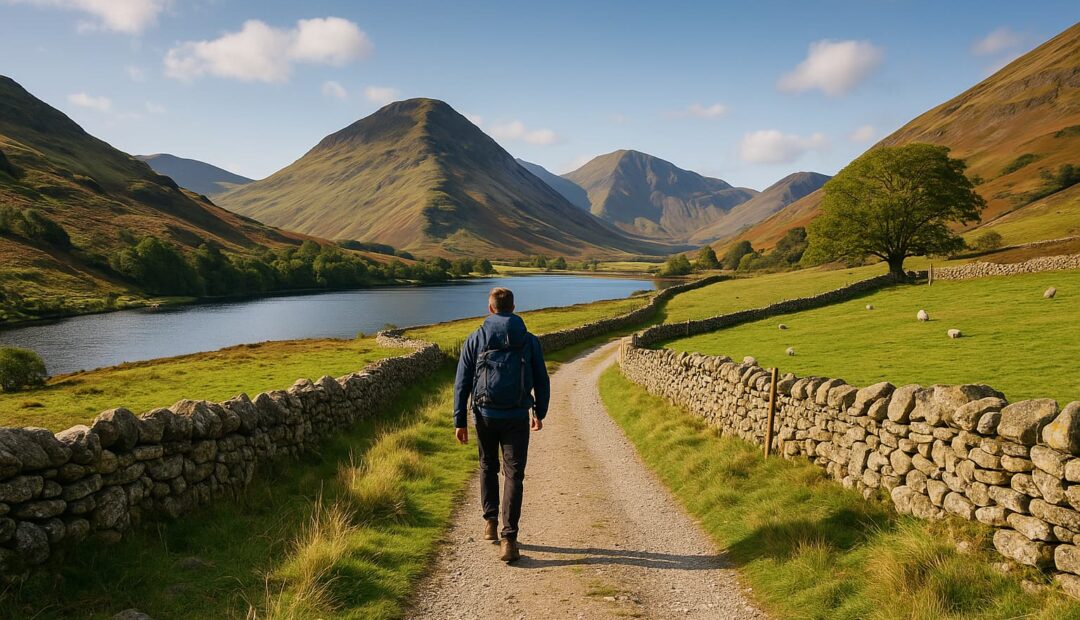
The Lake District is the largest and most famous National Park in England, recognised globally for its soaring mountains, poetic scenery, and shimmering lakes. Designated as a UNESCO World Heritage Site, it attracts millions of walkers each year who come to experience everything from relaxed lakeside ambles to challenging summit climbs. Here, landscapes shaped by Ice Age glaciers create dramatic contrasts: steep ridges, deep valleys, and mirror-like water bodies bordered by quiet villages.
Top Trails
- Scafell Pike Summit Trail – England’s highest mountain (978m), offering rugged terrain, panoramic views, and unbeatable summit rewards.
- Helvellyn via Striding Edge – A legendary ridge walk known for its thrilling scramble sections and breathtaking vantage points.
- Catbells – A favourite for families and beginner hikers, offering stunning views over Derwentwater and Keswick.
What Makes It Special
The Lake District has inspired centuries of writers and artists, including William Wordsworth and Beatrix Potter. Walking here is more than a physical activity; it is a cultural and emotional journey. Idyllic villages such as Ambleside, Grasmere, and Windermere offer cosy cafés, lakeside pubs, and heritage attractions.
2. Peak District National Park
Britain’s First National Park and a Haven for Gritstone Adventures
Established in 1951, the Peak District was the UK’s first National Park and remains one of the most accessible from major cities such as Manchester, Sheffield, Nottingham, and Derby. It offers a remarkable variety of landscapes — from wild peat moorlands to dramatic rock edges and peaceful dales. Popular with hikers, climbers, cyclists, and paddle sports enthusiasts, it strikes a balance between natural beauty and outdoor challenge.
Top Trails
- Kinder Scout Plateau – A demanding hike with bogs, boulders, and clouds rolling across the moor tops.
- Mam Tor Ridge Walk – Known as the “shivering mountain,” offering views of Edale and Castleton.
- Monsal Trail – A scenic walking and cycling route that passes through old railway viaducts and tunnels.
What Makes It Special
The Peak District played a historic role in the fight for public access to the countryside. The 1932 Kinder Mass Trespass laid the foundations for the rights that walkers enjoy today. Its limestone dales, such as Dovedale and Lathkill Dale, offer gentle riverside routes perfect for families and nature watchers.
3. Yorkshire Dales National Park
A Landscape of Limestone Wonders and Picturesque Villages
Known for dramatic rock formations, deep valleys, and lush farmland, the Yorkshire Dales offer a slower, peaceful pace. This National Park brings together ancient geology, agricultural heritage, and small communities that preserve traditions. It is well-known for waterfalls, stone barns, cheese-making, and the Three Peaks Challenge.
Top Trails
- The Yorkshire Three Peaks – 24-mile endurance challenge covering Pen-y-ghent, Whernside, and Ingleborough.
- Malham Cove & Gordale Scar – Limestone cliffs, waterfall routes, and Harry Potter filming locations.
- Aysgarth Falls Walk – A scenic route following a series of impressive waterfalls.
What Makes It Special
The landscape changes dramatically throughout the day as sun and mist move across limestone pavement and dry-stone walls. Traditional pubs, village museums, and artisan food producers make it perfect for multi-day visits.
4. North York Moors National Park
Purple Heather Moors, Ancient Woodland, and Coastal Clifftops
The North York Moors combine vast open moorland with romantic forests and a dramatic coastline. Its sweeping heather fields create unforgettable purple scenery in late summer. The park is rich in wildlife, including birds of prey and deer, and dotted with historic abbeys, railways, and secluded bays.
Top Trails
- Cleveland Way National Trail – A 109-mile coastal and moorland route suitable for multi-day walking.
- Roseberry Topping – A short but steep climb offering spectacular sunrise views.
- Goathland Forest Walk – Famous for filming locations including Heartbeat and the Hogwarts train station.
What Makes It Special
The heritage steam railway running between Pickering and Whitby offers unforgettable travel experiences. The coastal section includes dramatic cliffside paths and fossil-rich beaches.
5. Northumberland National Park
England’s Quietest National Park with a Dark Sky Reserve
Northumberland offers solitude, archaeology, and wide-open wilderness. It contains Europe’s largest area of protected night sky, making it a world-class starwatching destination. The park is home to the most dramatic sections of Hadrian’s Wall.
Top Trails
- Hadrian’s Wall Path – A historically important long-distance trail weaving along Roman fortifications.
- The Cheviot Summit – A remote and rewarding climb in the Cheviot Hills.
- Sycamore Gap Walk – A famous film landmark beside the wall.
What Makes It Special
It feels untouched and wild, far from city noise. At night, the Milky Way is clearly visible, adding magic to camping experiences.
6. South Downs National Park
Rolling Chalk Hills, Vineyards, and Coastal Views
Stretching from Winchester to Eastbourne, the South Downs offer gentle, accessible beauty. With chalk grassland, farmland, traditional villages, and panoramic headlands, it offers a peaceful walking environment suitable for all fitness levels.
Top Trails
- South Downs Way – A 100-mile National Trail ideal for multi-day walking or cycling.
- Beachy Head & Seven Sisters Cliffs – Iconic white chalk cliffs above the English Channel.
- Devil’s Dyke Walk – A deep natural valley with sweeping hilltop views.
What Makes It Special
The park is filled with heritage vineyards, local food producers, and traditional flint-stone villages. Paragliding and cycling are also hugely popular.
7. Dartmoor National Park
Land of Torrs, Granite, Myths, and Wild Ponies
Dartmoor showcases rugged beauty dominated by granite tors — weather-carved rock outcrops sitting above rolling moors. It is steeped in folklore, ancient monuments, and wide skies. Dartmoor ponies roam freely, adding charm and heritage.
Top Trails
- Haytor & Hound Tor Circular – Classic tors with panoramic views.
- Two Moors Way – Cross-country trail linking Dartmoor and Exmoor.
- Wistman’s Wood Trail – A mystical, moss-covered oak forest.
What Makes It Special
The park contains Bronze Age settlements, stone circles, tors shaped by centuries of weathering, and rivers that cut through deep wooded valleys.
8. Exmoor National Park
Where Sea Cliffs Meet Deep River Valleys
Exmoor offers a blend of dramatic coastal scenery and wooded inland landscapes. It has some of the highest sea cliffs in England and is known for its wildlife, including red deer and Exmoor ponies.
Top Trails
- South West Coast Path: Lynmouth to Porlock – Challenging coastal ascent/descents.
- Dunkery Beacon – Highest point with sweeping countryside views.
- Watersmeet Valley Trails – River walks with deep gorges and waterfalls.
What Makes It Special
Night skies, wildlife watching, and outdoor adventure combine to create a peaceful, restorative experience.
9. New Forest National Park
Ancient Woodland, Free-Roaming Ponies, and Family-Friendly Trails
The New Forest is a place where time seems to slow down. Ancient trees, open heathland, coastal marshes, and tranquil cycle paths make it ideal for families, horse riders, and gentle walkers.
Top Trails
- Blackwater Tall Trees Trail
- Lyndhurst Woodland Circular
- Bolderwood Deer Sanctuaries Path
What Makes It Special
New Forest ponies roam freely, and heritage traditions continue from centuries of forest management dating back to William the Conqueror.
10. The Broads National Park
Waterside Paradise of Lakes, Marshes, and Wildlife
The Broads are different from other parks: a landscape shaped by medieval peat digging that became an extensive wetland network. It is known for birdwatching, boating, and peaceful waterside walks.
Top Trails
- How Hill to Ludham Bridge
- Ranworth Boardwalk
- Riverside Walks in Wroxham and Horning
What Makes It Special
It is a haven for wildlife, including rare butterflies, swans, and otters. Boat-based exploring is a unique way to enjoy nature.
FAQs
1. What is the best time of year to visit England’s National Parks for hiking?
The best time to visit England’s National Parks depends on the hiking experience you prefer. Spring and summer (April to September) offer longer daylight hours, warmer temperatures, and vibrant wildflowers. Autumn brings colourful foliage and peaceful trails with fewer crowds. Winter hiking is possible but requires careful planning due to shorter days and unpredictable weather. Each season has unique beauty, so choose timing based on whether you prioritise scenery, safety, or solitude.
2. Are the hiking routes in England’s National Parks suitable for beginners?
Yes, most National Parks offer trails designed for all ability levels, from accessible flat paths to advanced mountain routes. Parks such as the New Forest, Broads, and parts of the Peak District provide easy, family-friendly walks with clearly marked routes. Meanwhile, experienced hikers can head to tougher climbs such as Scafell Pike, Helvellyn, or Kinder Scout. It is recommended to check distance, elevation, and expected duration before choosing a route that suits your ability.
3. Do I need special equipment to walk in the National Parks?
Basic walking gear improves safety and comfort, especially on longer trails. Good walking boots, waterproof layers, a map or GPS, snacks, plenty of water, and a fully charged phone are essential. In mountainous or remote regions, carrying a compass, head torch, and emergency blanket is strongly recommended. Conditions can change rapidly, so layering clothing is crucial. For most easy walks, trainers and light outdoor clothing are sufficient, but preparation is key for high-level routes.
4. Can I bring dogs on walks in England’s National Parks?
Dogs are generally welcome across National Parks, but owners must follow local restrictions and seasonal rules. During lambing and ground-nesting bird season, dogs may need to be kept on leads. Certain trails pass through farmland with livestock, where extra control is essential. Many parks offer dog-friendly pubs, facilities, and recommended routes. Always carry waste bags and respect wildlife habitats. With responsible care, the parks provide excellent exercise and enrichment for dogs.
5. Are there entry fees for National Parks in England?
There are no entry fees to access England’s National Parks, as they are open for public enjoyment. However, some car parks, heritage attractions, museums, and visitor centres may charge fees. Multi-day hikes might require accommodation or transportation costs. The free-to-enter model reflects the belief that natural landscapes should remain accessible to everyone. Donations to conservation bodies such as the National Trust or local volunteer rangers support the protection of these landscapes.
6. What makes hiking in England unique compared to other countries?
England’s outdoor environment blends natural beauty with deep historical and cultural context. Trails often pass through castle ruins, Roman walls, ancient stone circles, traditional farms, and villages dating back hundreds of years. Distances between towns make multi-day hiking easily supported by inns and small shops. Public access laws allow walking across large areas of open land. Wildlife, varied terrain, and rich storytelling make exploring the English countryside an immersive cultural experience.
7. Which National Parks are best for multi-day walking adventures?
Multi-day hikers will particularly enjoy the Lake District, South Downs, Yorkshire Dales, and Northumberland. Popular long routes include the South Downs Way, Cleveland Way, Coast to Coast Path, and Hadrian’s Wall Path. These trails offer diverse terrain, accommodation options, and established way-marking. For greater challenge, the Two Moors Way or the Yorkshire Three Peaks offer demanding experiences. Planning ahead and checking weather conditions is essential for safe multi-day journeys.
Conclusion
England’s National Parks provide a remarkable diversity of landscapes for walkers, hikers, and outdoor enthusiasts. From towering mountain summits and rugged moorlands to peaceful forests, dramatic coastlines, and quiet riverside paths, these protected spaces reflect the natural and cultural heritage that has shaped the country’s identity. They offer adventure, wildlife encounters, physical wellbeing, and freedom from the pace of modern urban life. For many, walking in these parks is not just recreation — it is restoration.
These 10 National Parks each offer something unique, whether you seek remote solitude, thrilling climbs, family-friendly trails, or scenic photography spots. With free access, well-maintained paths, and welcoming communities, England’s great outdoors invites everyone to explore and connect with nature. Whether you set out for a short afternoon walk or a multi-day expedition, these landscapes provide perspective, inspiration, and unforgettable memories — making them essential destinations for all who love the natural world.