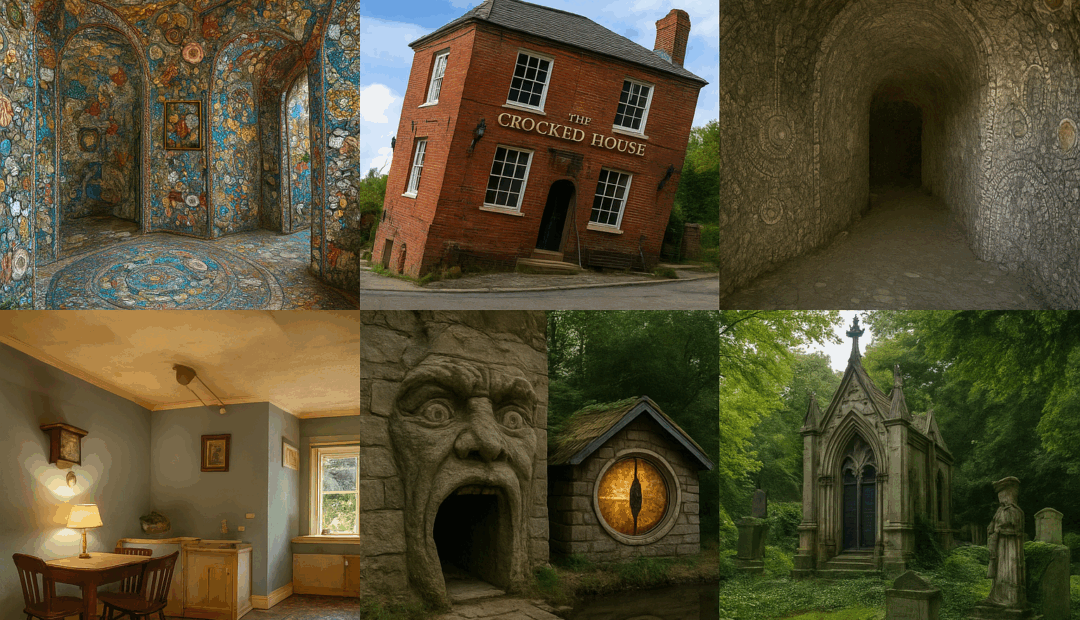
Think you know England? Think again. Beyond the royal palaces, red buses, and classic landmarks lies a world of fascinating oddities—places that surprise, puzzle, and entertain in equal measure. From gravity-defying pubs to mysterious underground grottoes, these hidden gems prove that England’s eccentricity is part of its charm. Let’s journey through eight of the most unusual yet surprisingly fun attractions in England!
Introduction
England is a nation of endless layers—a country where medieval towers meet modern art, and centuries of history intertwine with creative innovation. Yet, amid its postcard-perfect landscapes and stately heritage, there exists another England: one that thrives on quirkiness, imagination, and delightful strangeness.
These are the places where curiosity is rewarded—where artists build houses out of dreams, pubs lean at impossible angles, and tunnels are lined with seashells whose secrets are lost to time.
For travelers seeking something beyond the predictable, these eight unusual attractions showcase England’s wonderfully eccentric side. They’ll make you laugh, think, and see the country in a whole new light. So, pack your sense of adventure and prepare to explore the delightfully unexpected!
1. The House of Dreams Museum – London
In a quiet South London neighborhood stands a house unlike any other—The House of Dreams Museum, a kaleidoscopic explosion of color, emotion, and storytelling. Created by artist Stephen Wright, this home-turned-installation is filled with mosaics made from broken toys, ceramics, photographs, beads, and handwritten notes. Every inch tells a story about memory, loss, and creativity.
Visitors describe it as part art gallery, part diary, and part spiritual experience.
Fact: It took over two decades to complete, and new pieces are still being added every year.
Did You Know?
Stephen Wright began this artistic journey after the loss of his parents, turning personal pain into expressive art—a process he describes as “grief alchemy.”
Travel Tip: Visits are by appointment only, making it a peaceful and intimate experience. Book online to secure your time slot.
2. The Crooked House – Himley, West Midlands
Few places mess with your sense of balance like The Crooked House in Himley. Originally built as a farmhouse in 1765, it started to tilt when nearby coal mining caused the ground to subside. Today, the building leans dramatically, making chairs, tables, and even pints of beer appear to defy gravity!
Inside, optical illusions abound—you might see marbles rolling uphill or drinks sliding “sideways.”
Fact: The pub tilts approximately 15 degrees—more than the Leaning Tower of Pisa’s current 4 degrees!
Did You Know?
The Crooked House once hosted paranormal events and is rumored to have mischievous spirits that enjoy the quirky atmosphere as much as visitors do.
Travel Tip: It’s best visited in daylight to fully appreciate its leaning structure. The surrounding countryside also offers charming walking trails.
3. The Shell Grotto – Margate, Kent
Hidden beneath the seaside town of Margate lies one of England’s most enduring mysteries: the Shell Grotto. Discovered accidentally in 1835, it’s a winding underground passage covered in over 4.6 million seashells, arranged in intricate mosaics that shimmer in candlelight.
No one knows who built it—or when. Some theories suggest it’s an ancient pagan temple; others think it’s an elaborate Victorian art project.
Fact: The grotto is made from whelks, mussels, cockles, and oysters arranged over 2,000 square feet of wall space.
Did You Know?
Despite modern analysis, the lime mortar used inside doesn’t match local materials, suggesting it may predate recorded history in the area.
Travel Tip: Combine your visit with Margate’s Turner Contemporary Gallery for a day that blends ancient mystery and modern art.
4. The Forbidden Corner – North Yorkshire
If Lewis Carroll had built a theme park, it might look like The Forbidden Corner. Located in the scenic Yorkshire Dales, this whimsical labyrinth of tunnels, sculptures, fountains, and optical illusions is designed to amuse and confuse visitors of all ages.
Originally a private folly, it became a public attraction in 1994. Nothing here is quite what it seems—doors lead nowhere, statues talk, and walls move unexpectedly.
Fact: The site began as a private garden project for the Armstrong family before becoming one of Yorkshire’s top attractions.
Did You Know?
Every ticket comes with a “mystery map” full of riddles to solve as you explore—making it part treasure hunt, part dreamscape adventure.
Travel Tip: Pre-booking is essential in summer months, and wearing comfortable shoes is highly recommended—you’ll be doing plenty of exploring!
5. Highgate Cemetery – London
Beautiful, eerie, and steeped in history, Highgate Cemetery is where art and death intertwine. Established in 1839, it houses over 170,000 graves, including those of Karl Marx, George Eliot, and Douglas Adams. Its overgrown ivy, elaborate tombs, and crumbling Gothic architecture make it one of London’s most atmospheric landmarks.
Far from morbid, it’s a place of reflection and beauty.
Fact: The cemetery was designed during the Victorian “garden cemetery” movement to offer a peaceful resting place within nature.
Did You Know?
In the 1970s, reports of a “Highgate Vampire” sparked media frenzy—complete with midnight stake-outs and local legends that persist even today.
Travel Tip: Take a guided tour of the West Cemetery to access the Egyptian Avenue and Circle of Lebanon—exclusive areas full of artistry and symbolism.
6. The Beekeeping Centre of Excellence – Buckfast Abbey, Devon
Nestled within the peaceful grounds of Buckfast Abbey, this unique center celebrates one of England’s sweetest innovations—the Buckfast Bee. Developed by monk Brother Adam in the early 1900s, this bee species is world-renowned for its gentle temperament and high productivity.
Visitors can learn about beekeeping, watch hives in action, and taste freshly harvested honey—all while exploring the serene abbey gardens.
Fact: Brother Adam traveled across Europe and North Africa for 70 years to breed the perfect bee.
Did You Know?
The Buckfast Bee is so successful it’s now used by beekeepers in over 50 countries for sustainable honey production.
Travel Tip: Visit during summer when the gardens are in bloom and honey-tasting sessions are offered in the Abbey gift shop.
7. The Upside Down House – Brighton
If you love optical illusions, selfies, and creative photo ops, the Upside Down House in Brighton will flip your perspective—literally! Designed like a regular two-storey home, every piece of furniture and décor is fixed to the ceiling, creating the illusion that gravity has reversed.
Visitors can walk “on the ceiling,” dangle from “hanging beds,” and capture hilarious, mind-bending photos.
Fact: The house’s exterior was modeled after traditional English seaside architecture, painted in bright pastel tones.
Did You Know?
Each season brings a new theme—previous designs have included Christmas cottages, beach houses, and futuristic interiors.
Travel Tip: Go on a sunny day—the sea views from the “ceiling windows” make for incredible photos!
8. The Dragon’s Eye Cabin – Pembrokeshire
Tucked within the Welsh woodlands near the England border, The Dragon’s Eye Cabin is a fantasy come true. Its circular golden window resembles a dragon’s eye gazing over a reflective lake, offering both stunning views and luxurious eco-friendly accommodation.
The cabin’s shimmering “scales” are made from recycled materials, combining sustainability with style.
Fact: It featured in Channel 4’s Cabins in the Wild and quickly became one of the UK’s most unusual stays.
Did You Know?
The cabin’s design draws inspiration from Welsh dragon folklore, symbolizing strength, protection, and magic.
Travel Tip: Book well in advance—there’s only one cabin, and it’s in high demand year-round.
FAQs
1. Are these attractions suitable for families?
Yes, many are family-friendly and designed to delight visitors of all ages. The Forbidden Corner and Upside Down House are especially popular with children for their playful, imaginative experiences. Some attractions, like Highgate Cemetery, cater better to adults due to their historical and reflective nature, but all offer a sense of adventure and education that families can enjoy together.
2. How can I reach these places without a car?
England’s public transport system makes many of these destinations accessible. Major attractions like Margate’s Shell Grotto and Brighton’s Upside Down House are just a short walk from train stations. For rural sites like The Forbidden Corner, buses and local taxis connect from nearby towns. Trainline and National Express websites are great for planning routes conveniently from anywhere in the UK.
3. Do I need to book tickets in advance?
Advance booking is recommended, especially during holidays or weekends. Smaller, niche attractions such as the House of Dreams Museum and The Forbidden Corner limit entry to preserve the visitor experience. Booking early ensures your slot, helps avoid queues, and often secures discounted rates. Always check official websites for the latest ticket information and opening hours before your trip.
4. What’s the best time to visit these attractions?
The best time to explore unusual English attractions is from April to October, when the weather is milder, and gardens are lush. Indoor experiences like the Shell Grotto and House of Dreams are enjoyable year-round. Early mornings or weekdays are ideal for avoiding crowds, particularly in summer months when seaside towns and family-oriented attractions get busy.
5. Are these attractions accessible for people with disabilities?
Accessibility varies by location. Sites like Buckfast Abbey and the Upside Down House have accessible facilities and ramps. However, older or underground sites such as the Shell Grotto and Highgate Cemetery may present uneven terrain or narrow passages. Most venues provide accessibility details online, and staff are generally happy to assist visitors upon prior notice.
6. Can I take photos inside these attractions?
Photography is usually welcome but sometimes restricted to certain areas. Flash photography may not be allowed in historical or fragile sites like Highgate Cemetery or the Shell Grotto to protect artifacts and surfaces. Attractions such as the Upside Down House actively encourage creative photography, making them popular for Instagram and travel blogs. Always confirm on-site guidelines before snapping away.
7. Which attraction is considered the most unique?
Every site on this list offers its own brand of originality, but the Shell Grotto and The Forbidden Corner are often crowned the most unique. The Shell Grotto’s mysterious origins and intricate artistry captivate historians and artists alike, while The Forbidden Corner’s labyrinthine design offers an immersive adventure filled with riddles and surprises—unlike anything else in England.
Conclusion
From underground temples to gravity-defying houses, England’s hidden gems remind us that travel is about discovery—not just ticking off famous landmarks. These unusual attractions showcase the heart of English eccentricity: creativity, imagination, and an appreciation for the wonderfully weird.
So, on your next trip, step off the beaten path. Wander through crooked rooms, follow mysterious tunnels, and marvel at handmade wonders that tell stories no guidebook can. You’ll leave not only entertained but inspired—having experienced a side of England that few travelers ever see.