Gerald Ford’s son’s self-reliant path through business and environmental stewardship
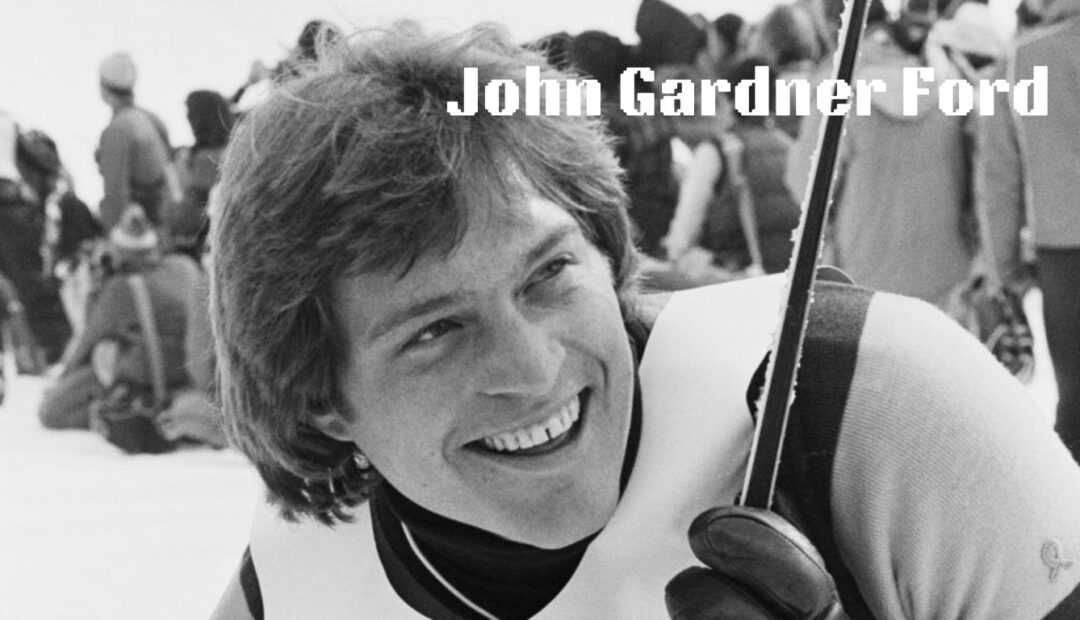
The second son of President Gerald Ford, John Gardner Ford was born in 1952 and is a businessman and environmentalist. He directed California Infoplace, a pioneer in interactive information kiosks, and co-founded Outside magazine. His career encompassed forestry, publishing, and digital technology. Despite coming from a well-known political family, Ford forged his own route by concentrating on outdoor activities, conservation, and creative commercial endeavors while leading a private life away from the political limelight.
Childhood and Family History
On March 16, 1952, John Gardner Ford was born in Grand Rapids, Michigan. He was the second of Gerald and Betty Ford’s four children. His father represented Michigan in the US Congress at the time of his birth.
Ford was exposed to the rhythms of public service while growing up in a politically engaged family. Susan Ford, Steven Ford, and Michael Ford are his siblings. The Ford family placed a strong emphasis on modesty, discipline, and integrity in their upbringing despite their father’s rising national reputation.
Ford was born and raised in Grand Rapids, but as Gerald Ford’s duties in Washington grew, the family moved to Alexandria, Virginia. He graduated from T.C. Williams High School in Alexandria in 1970.
Early Career and Education in Forestry
Ford attended Jacksonville University in Florida to further his education after graduating from high school. He later transferred to Utah State University, where he concentrated on environmental studies and forestry. His growing interest in ecology, conservation, and resource management was evident in his academic pursuits.
Ford spent his summers working for the U.S. Forest Service while he was a student. As a fireman, these encounters put him in close proximity to the untamed terrain of America’s national forests. He gained direct knowledge of the difficulties of preserving natural ecosystems by fighting wildfires and helping with forest management activities.
Ford maintained his connection to nature by working with the National Park Service after earning a degree in forestry. A large portion of this work was related to national parks like Yellowstone, where he worked as a conservation expert and park ranger.
Starting Out in Publishing: Outside Magazine’s Establishment
When Ford co-founded Outside in 1977, it was his first significant venture. The newspaper was created to honor nature-related travel experiences, adventure sports, outdoor exploration, and environmental consciousness.
Environmental issues and outdoor leisure were gaining popularity in the US at the time. Readers who were enthusiastic about hiking, skiing, climbing, and other outdoor pursuits rapidly became fans of Outside magazine. The publication’s emphasis on photography, storytelling, and environmental consciousness contributed to its rise to prominence in the field of outdoor journalism.
California Newspaper Publishing
Ford relocated to San Diego, California, shortly after assisting in the founding of Outside magazine. He and businessman George Gorton bought the Del Mar News-Press, a weekly local newspaper that served communities in San Diego County’s coastal region, in the late 1970s.
Ford learned a lot about journalism, publishing, and business management while serving as co-owner and publisher. Managing a community newspaper meant striking a balance between local reporting, delivery logistics, advertising revenue, and editorial content.
Technology Transition: California Infoplace
Ford turned his attention from publishing to technology during the middle of the 1980s. Around 1985, he co-founded California Infoplace, a technology company, with business partner Byron Georgiou.
California Infoplace specializes in installing interactive digital kiosks and information displays in public spaces and retail malls. Through touchscreen interfaces, these systems gave users access to information about nearby companies, services, and events.
Ford was instrumental in formulating the company’s strategy and expansion in his capacity as principal owner and CEO. With time, California Infoplace grew to offer lottery ticket kiosks and digital advertising displays across California and other areas.
This technological shift demonstrated Ford’s flexibility and spirit of entrepreneurship. He established his business in the expanding market for interactive public technology by joining the digital information sector early on.
Participation in politics and civic engagement
Ford never sought public office, but politics continued to play a significant role in his life. His involvement was most noticeable during his father Gerald Ford’s 1976 presidential campaign.
Ford made numerous trips around the country to promote his father’s reelection campaign during that time. He participated in media interviews, met with voters, and made appearances at campaign events. His involvement demonstrated his commitment to his family as well as his awareness of the importance of the presidential contest.
After serving as executive director of the host committee for the 1996 Republican National Convention in San Diego, Ford returned to national politics years later. In that capacity, he assisted in organizing the big political event’s organization, funding, and logistics.
Ford also took active in local civic affairs in the San Diego area. He was a member of the board that oversaw the Del Mar Fair, a significant Southern California community event. Pete Wilson and George Deukmejian, the governors of California, appointed him to the board.
Individual Life and Family
John Gardner Ford wed Juliann Felando, a San Diego tuna fishing executive’s daughter, in 1989. Their union signaled the start of a secure family life that would mostly take place out of the spotlight.
Christian Ford and Jonathan Ford are the couple’s two sons. The family has mostly resided in Southern California, especially in the San Diego and Rancho Santa Fe regions.
People who know Ford frequently characterize him as laid back, friendly, and devoted to his family. Even though he was raised in a presidential home, he has typically favored a more sedate lifestyle focused on his career, community, and hobbies.
Ford continued to feel a connection to his parents’ legacy. He has occasionally taken part in commemorative ceremonies honoring the 38th president and Betty Ford’s public service, as well as events related to the Gerald R. Ford Presidential Library.
The net worth of John Gardner Ford
With an estimated net worth of $10 million, John Gardner Ford’s income is primarily derived from his job as an entrepreneur rather than from public service or politics.
Ford developed his commercial career through publishing and technological endeavors after co-founding Outside in 1977. In the end, he was appointed CEO of California Infoplace, a company that specializes in digital information kiosks and advertising displays.
Public scrutiny and controversies
Ford has faced comparatively less controversy when compared to numerous public individuals associated with presidential families.
He was occasionally presented by the media in the 1970s as an independent young man. He freely admitted to experimenting with marijuana as a young man in interviews from that era, which was indicative of the larger cultural climate of the time.
When Ford’s driver’s license was suspended for driving under the influence in the early 1980s, he had a small legal problem. He was briefly detained during an altercation involving protest placards at an equestrian event during the 1984 Summer Olympics in Los Angeles. That incident did not result in any charges.
Public Perception and Legacy
John Gardner Ford is now frequently referred to as President Ford’s most reclusive child. He concentrated mostly on entrepreneurial and outdoor pursuits, while his siblings worked in advocacy, education, and entertainment.
It is often noted by observers that Ford was able to strike a compromise between his desire for personal freedom and the demands of a well-known political family. He proved that a presidential child might have a distinctive professional identity by starting publishing and technology companies.
In conclusion
The life of John Gardner Ford serves as an example of a route influenced by both freedom and heritage. He was up surrounded by political history and public attention as the son of President Gerald Ford. But instead of following the expectations that are frequently placed on presidential families, he opted to pursue pursuits that represented his own inclinations.
Ford established a career identity focused on innovation and the outdoors through his work in publishing, forestry, and technological entrepreneurship. His career serves as an example of how leadership is not limited to politics.