Showcasing innovation, leadership, and experiential learning in Suffield’s agriscience curriculum.
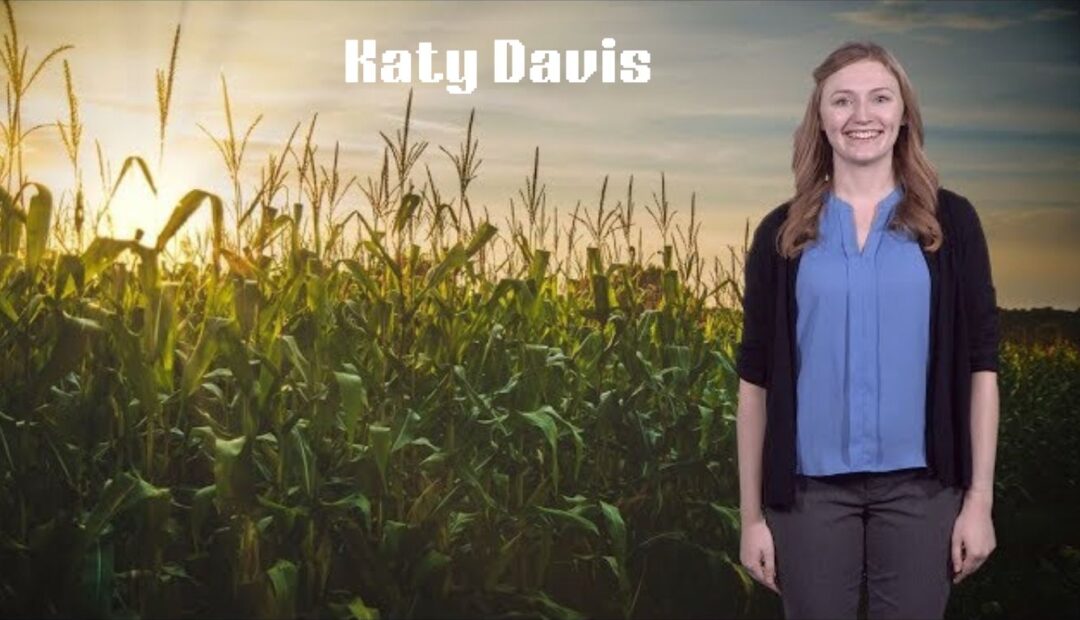
Based in Suffield, Connecticut, Katy Davis teaches agriscience at the Suffield Regional Agriscience Center, which is housed within Suffield High School. Davis, a graduate of the University of Connecticut with a degree in Agriculture and Natural Resources, combines classroom instruction with real-world, experiential learning in fields including agricultural biotechnology, plant science, and animal science. Her background includes training on operational farms, outreach work with UConn Extension, and leadership positions in 4-H. With this varied background, Davis is committed to giving her pupils the abilities and information required for professions and postsecondary study in environmental science, sustainability, and modern agriculture.
An Agriculture-Based Foundation
Katy Davis was raised in Central Connecticut, an area where rural scenery and agricultural customs continue to play a significant role in the local way of life. She showed an early interest in science, agriculture, and community service, which would subsequently shape her academic and career trajectory.
Her early involvement in youth agricultural organizations contributed to the development of her leadership and service skills. Her comprehension of agriculture was enhanced by these early encounters, which also emphasized the value of education as a link between scientific understanding and practical application. Her work as an educator is still influenced by this viewpoint.
University of Connecticut Academic Training
Davis continued her study at the University of Connecticut, where she graduated from the College of Agriculture, Health, and Natural Resources with a Bachelor of Science in Agriculture and Natural Resources. Her academic concentration blended immersive, experiential learning with classroom-based science; this method would subsequently influence her teaching style.
Her year-round employment with UConn’s dairy herd was one of the most memorable parts of her collegiate experience. Davis received a great deal of experience in animal health, livestock management, and day-to-day farm operations as one of the few students chosen for the farm crew. Later, she emphasized that practical engagement strengthened and broadened her academic studies, describing this hands-on setting as crucial to her learning.
Davis indicated a long-term dedication to teaching and curriculum development in the agriscience area by announcing plans to seek a master’s degree in agricultural education after earning her undergraduate degree.
Development of Leadership thru 4-H
Davis continued to be actively involved in 4-H, a nationally renowned youth development program that emphasizes leadership, agriculture, and life skills, as she finished her education. Her participation resulted in a noteworthy accomplishment in 2017 when she was chosen to attend a National Agriculture Day leadership training in Washington, D.C., as one of only twelve Connecticut 4-H college students.
Davis was introduced to national leadership development, lobbying tactics, and agricultural policy conversations through this unique opportunity. Her interest in agricultural outreach and teaching outside of the classroom was also strengthened by it. Her involvement in this program demonstrated her intellectual prowess as well as her capacity to advocate for agriculture education on a larger scale.
Early Contributions to Public Education and Extension
Through her work with UConn Extension, Davis made contributions to agricultural communication in addition to her leadership activities and courses. She wrote outreach materials on emergency preparedness in 2017 that offered Connecticut families and rural areas useful advice and public health resources.
Davis’s ability to convert technical knowledge into understandable, community-focused content was evident in this early extension work. It also brought to light a recurrent topic in her work: the conviction that education ought to expand beyond traditional classroom settings in order to further the general welfare of society.
Making the Switch to Teaching in Suffield, Connecticut
After graduating from college, Katy Davis entered secondary school and joined the agriscience faculty in Suffield, Connecticut. She teaches high school-level agricultural science courses and oversees student projects at Suffield Regional Agriscience Center, according to official district documents.
Davis works with kids from many districts as part of this regional initiative, assisting them in exploring academic and professional options in environmental studies, biotechnology, animal science, and agriculture. Her responsibilities include both practical supervision and classroom instruction, which reflects the applied character of agriscience education.
Classroom Focus and Teaching Philosophy
Her personal educational experiences, especially her conviction in experiential learning, are reflected in Davis’s teaching style. Through labs, fieldwork, and project-based learning, she encourages students to apply principles while emphasizing scientific understanding in the classroom.
Usually, her classes incorporate:
- Fundamentals of plant and animal science
- Sustainability and agricultural systems
- Emerging agricultural technologies and biotechnology
Investigating a career in natural resources and food systems
In addition, she encourages students to join Future Farmers of America (FFA), which aids in the development of technical, leadership, and communication skills in addition to academic pursuits. Students can participate in service-oriented agricultural projects, network, and compete through FFA events.
Increasing Possibilities via Program Development
In addition to teaching every day, Katy Davis actively contributes to the Suffield agriscience program’s growth in educational possibilities. Her participation in program design and enrichment activities is documented in official meeting records from the Suffield Board of Education.
Board minutes from June 2025 attested to Davis’s planning and presentation of the curriculum for a student field trip to Iceland with an agriscience focus. She demonstrated her ability to connect global learning experiences with local curriculum goals throughout the discussion by outlining how the trip would relate coursework to practical applications in geology, renewable energy, and agricultural systems.
Dedication to Early and Advanced College Coursework
In addition, Davis has advanced the curriculum by getting qualified to instruct a Plant Breeding and Biotechnology course at the University of Connecticut Early College Experience. According to late 2024 curriculum committee data, this qualification would enable Suffield students to obtain college credit while still in high school.
Davis’s forward-thinking approach to education, which emphasizes academic rigor, early exposure to advanced subjects, and smooth transitions between secondary and postsecondary learning environments, is reflected in this endeavor.
Cooperation and Guidance
Davis works collaboratively with other professors in the Suffield agriscience department to provide a unified and thorough teaching experience. She takes part in off-site learning opportunities, such as regional and national field visits, research supervision, and student mentoring.
Her dedication to students’ growth outside of the classroom is further evidenced by her work as an academic guide and chaperone on field excursions to places like Washington, D.C. Through these encounters, students can make connections between agricultural science and professional networks, research institutions, and public policy.
More Wide-ranging Effects on Agriscience Education
When considered collectively, Katy Davis’s work demonstrates how agriscience educators’ roles in contemporary educational institutions are changing. She stands for a generation of educators who prepare students for challenging issues in food systems, sustainability, and environmental stewardship by fusing scientific expertise, real-world experience, and community involvement.
Her contributions guarantee that agriscience continues to be a vibrant and esteemed academic path that gives students a sense of purpose and understanding.
In conclusion
The career path of Suffield, Connecticut resident Katy Davis demonstrates the importance of committed teachers in creating learning settings that are future-focused. From her time at the University of Connecticut to her current position as a program leader and agriscience instructor, Davis has continuously placed a strong emphasis on academic performance, leadership development, and experiential learning.
She continues to improve agriscience education in Connecticut through student mentoring, curriculum innovation, and classroom instruction. In addition to helping the pupils she teaches today, her efforts support the region’s long-term agricultural education and community involvement.