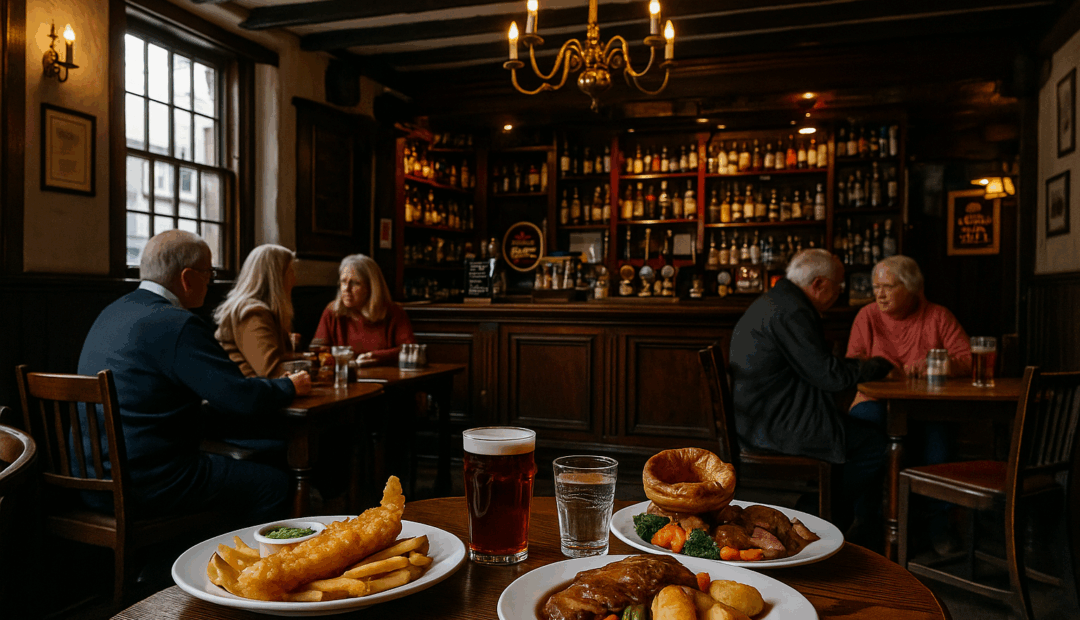
Step inside an English pub and you’ll discover more than just a place to enjoy a pint. Pubs are living symbols of tradition, community, and culinary delight. From cosy village inns with roaring fireplaces to historic city taverns brimming with stories, pub culture is at the heart of English life. With hearty classics like fish and chips alongside modern gastropub menus, pubs offer an authentic taste of England’s social fabric.
Introduction: Why Pubs Are More Than Just Drinking Spots
When people think of England, they often picture red telephone boxes, tea, cricket, and of course—the pub. But the pub is not merely a place for a pint; it’s a symbol of community, a centre of storytelling, and a home to some of the best comfort food in the country. Pubs are where life’s milestones are toasted, where debates are fuelled, and where friendships are nurtured.
Historically, pubs have been a gathering place for workers after a long day, a venue for celebrations, and a space for travellers to rest. Even today, they stand as cultural anchors that capture the very essence of English society.
Pubs as Social Hubs: The Beating Heart of Communities
In cities and small villages alike, pubs have long been the social glue holding communities together. They offer more than drinks—they provide a shared sense of belonging. Whether it’s neighbours catching up, football fans watching the big match, or friends gathering for Sunday lunch, pubs remain central to daily life.
- Local Connections: Villagers often rely on pubs for social interaction in rural areas where few other meeting places exist.
- Tradition and Ritual: Weekly pub quizzes, darts tournaments, and live music nights all foster camaraderie.
- Inclusive Spaces: Modern pubs welcome families, professionals, and tourists, making them intergenerational spaces.
Did You Know?
There are over 47,000 pubs across England, and some villages are so small that their pub is the only public building aside from a church.
Architectural Charm and Timeless Atmosphere
Every pub tells a story, not just through its regulars but through its walls, beams, and bar stools. From centuries-old coaching inns to sleek gastropubs, the design and atmosphere reflect the character of the region and its history.
- Rural Pubs: Often feature low ceilings, exposed beams, and roaring fireplaces that create a cosy setting.
- Urban Taverns: Bustling and modern, with larger spaces that cater to city crowds.
- Historic Inns: Some date back to medieval times, with Tudor timber frames and stone floors that echo with history.
Did You Know?
The oldest pub in England, Ye Olde Fighting Cocks in St Albans, dates back to 793 AD—making it older than many European countries!
Pub Etiquette and Traditions: How to Blend in Like a Local
Visiting an English pub is not just about what you drink, but how you behave. Etiquette and traditions give the experience its unique flavour.
- Ordering at the Bar: Unlike restaurants, you often pay upfront at the counter for drinks and food.
- Buying Rounds: A long-standing tradition where friends take turns buying drinks for the group.
- Cheers and Manners: A quick “cheers” or even raising your glass without clinking is a must.
Did You Know?
The practice of buying rounds has deep roots—it’s considered bad form to leave before your turn! Locals see it as a sign of fairness and camaraderie.
The Evolution of Pub Food: From Simple Fare to Gourmet Dining
Pub food has travelled a long way from salted peanuts and pork scratchings. Today, pubs are equally known for their food as for their beer, offering hearty classics alongside modern, restaurant-quality dishes.
Traditional Classics That Never Fade
- Fish and Chips: A national treasure, often served with tartar sauce and mushy peas.
- Sunday Roast: A feast with roast beef or lamb, Yorkshire pudding, and rich gravy.
- Shepherd’s Pie: Comforting minced lamb topped with mashed potatoes.
- Ploughman’s Lunch: Bread, cheese, and pickles—a meal of rustic simplicity.
Modern Pub Food Innovations
- Gastropubs: Focus on fine dining while keeping the pub’s relaxed atmosphere.
- International Flavours: Curries, tapas, and plant-based dishes are now common.
- Seasonal Menus: Reflecting sustainability, many pubs now source ingredients locally.
Did You Know?
The Sunday roast is so iconic that it has been nicknamed the “Sunday Service”, second only to church for many English families.
Drinks Beyond Beer: Exploring the Pub Bar
Beer may be the staple of English pubs, but the variety of drinks available today is staggering.
- Cask Ale: Brewed naturally and served at cellar temperature, giving a distinctive flavour.
- Cider: Especially popular in Somerset and Devon, with variations ranging from sweet to bone-dry.
- Gin and Whisky: The craft spirits boom has made pubs prime spots for trying local distillations.
- Non-Alcoholic Options: Alcohol-free beers and creative mocktails are on the rise.
Did You Know?
The UK holds a Cask Ale Week every September, celebrating the tradition of real ale through tastings and events.
Pubs as Living Museums: Stories and Legends in Every Corner
Many pubs are historic landmarks, filled with stories of kings, poets, and even ghosts. They act as living museums where the past is still present.
- Ye Olde Trip to Jerusalem (Nottingham): Believed to date back to 1189, built into sandstone caves.
- The Eagle and Child (Oxford): A favourite of authors C.S. Lewis and J.R.R. Tolkien.
- London Taverns: Some survived the Great Fire of 1666, serving patrons for centuries.
Did You Know?
Charles Dickens, William Shakespeare, and Winston Churchill were all known to frequent pubs—often finding inspiration or escape within their walls.
Challenges and the Future of English Pubs
While beloved, pubs face modern challenges including rising costs, declining alcohol consumption, and shifts in social habits. But many are innovating to stay relevant.
- Diversification: Offering coffee mornings, Wi-Fi workspaces, and community events.
- Sustainability: Embracing eco-friendly practices like farm-to-table menus and recycling.
- Family-Friendly Focus: More pubs now include play areas, soft drinks, and children’s menus.
Did You Know?
Pubs are closing at a rate of about one per day in England, yet gastropubs and community-owned pubs are rising in popularity to fill the gap.
FAQs on Pub Culture in England
1. Why are pubs so important in English culture?
Pubs have long served as social hubs in England, acting as places where communities gather, friendships grow, and traditions thrive. They’re not just drinking spots but central meeting points, often the heartbeat of small villages or lively city districts. With their history, rituals, and hospitality, pubs reflect the essence of English life.
2. What are some traditional English pub foods?
Traditional pub fare includes hearty meals like fish and chips, shepherd’s pie, steak and ale pie, and the famous Sunday roast with Yorkshire pudding. Many pubs also serve the ploughman’s lunch, a rustic spread of bread, cheese, and pickles. These comforting dishes reflect England’s culinary heritage and pair perfectly with a pint of ale.
3. How is pub etiquette different from restaurants?
In pubs, customers typically order food and drinks at the bar instead of waiting for table service. Buying drinks in rounds is a common tradition among groups, fostering fairness and camaraderie. Manners like saying “cheers” when raising glasses are expected. This casual, communal style of dining distinguishes pubs from restaurants in England.
4. What drinks are most popular in English pubs?
Cask ale remains a signature drink, celebrated for its natural brewing and cellar serving methods. Lager, cider, and craft beers are also widely enjoyed. Additionally, gin and whisky have grown in popularity with the rise of English distilleries. Most pubs now offer alcohol-free beers and mocktails, making them welcoming to all preferences.
5. Do English pubs host events besides drinking?
Yes, pubs regularly host events like quiz nights, darts tournaments, live music, and charity fundraisers. In rural areas, they often double as venues for community meetings or celebrations. Many modern pubs even run coffee mornings, yoga classes, and family activities, highlighting their evolving role as versatile cultural and social spaces.
6. Are pubs family-friendly in England?
While pubs were once adult-focused, many are now family-friendly, offering children’s menus, play areas, and non-alcoholic drink options. On weekends, families often gather for Sunday roasts, making pubs inclusive spaces. Some pubs even provide high chairs and board games, creating a welcoming environment for all generations to share in the tradition.
7. What challenges are English pubs facing today?
English pubs face rising costs, changing drinking habits, and competition from at-home entertainment. Closures are common, but many pubs adapt by diversifying menus, hosting non-traditional events, and adopting eco-friendly practices. Gastropubs and community-owned pubs are growing in popularity, ensuring the tradition continues by blending heritage with modern expectations.
Conclusion: Why Pubs Will Always Matter
Pubs remain the heart and soul of England’s cultural identity. They embody warmth, tradition, and inclusivity, offering a slice of English life to anyone who walks through their doors. Whether you’re sharing a pint with friends, enjoying a roast dinner, or simply soaking in the atmosphere of centuries-old walls, the pub experience is uniquely English.
At the same time, pub food has become a culinary highlight, blending the best of tradition with modern creativity. From comfort classics to innovative menus, pubs continue to evolve without losing their charm. For visitors and locals alike, they are not just places to drink—they are places to belong.